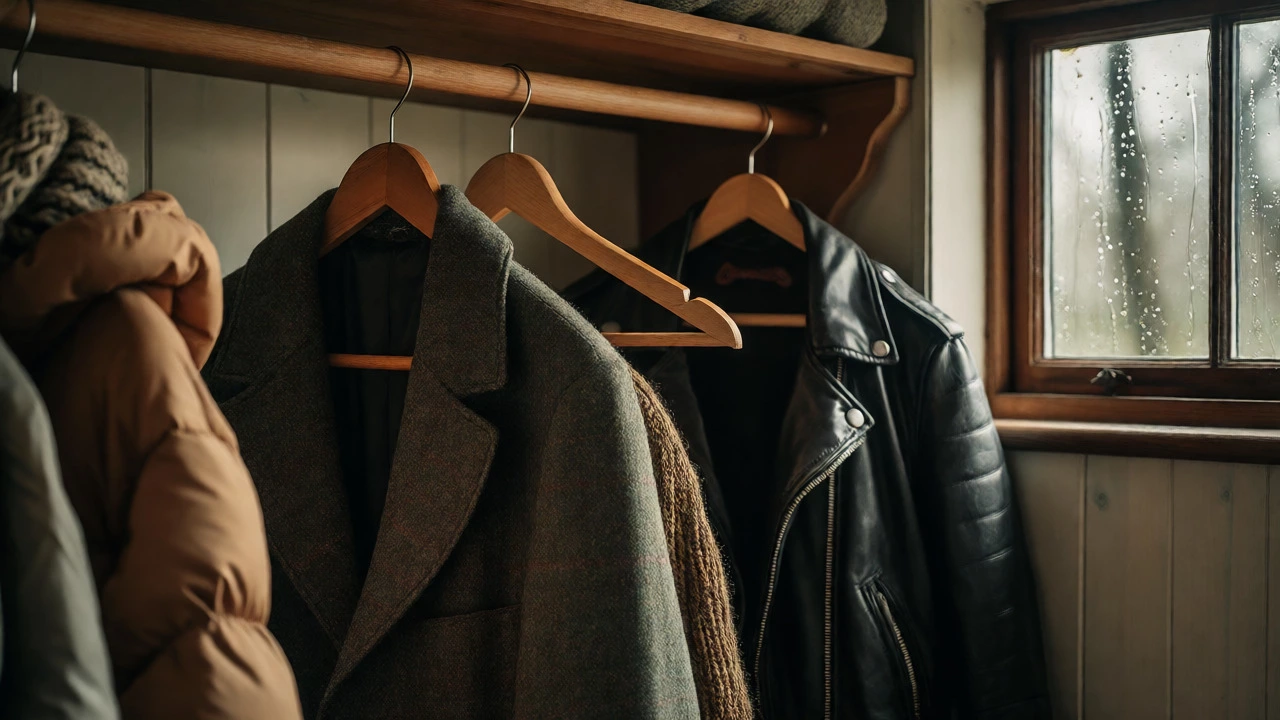
Jacket Storage Advisor
Select your jacket type below to get the recommended storage method according to expert guidelines.
If you live in Galway, you know the drill: one minute it’s drizzling sideways, the next the sun is blasting through a gap in the clouds, and by evening, you’re freezing again. This erratic weather puts your outerwear under serious stress. You probably have three different coats hanging on a hook by the door because none of them fit properly in the closet, or maybe you’ve got a pile of puffer jackets stuffed into a bag that looks like a sad marshmallow mound. The big question every Irish person faces when trying to organize their home is simple but tricky: should I fold or hang my jackets?
The answer isn’t a simple yes or no. It depends entirely on what kind of jacket you own, how much space you have, and whether you want to keep that expensive wool coat from Harris Tweed looking crisp for another decade. Let’s break down exactly how to store your outerwear so it survives our damp winters without developing weird shoulder bumps or losing its shape.
The Golden Rule: Structure Matters More Than Fabric
Here is the basic logic most people miss. If a jacket has structure-meaning it has a defined shape, padding, or stiff fabric-it usually needs to be hung. If it is soft, flexible, and doesn’t hold a rigid form, folding is often better. Think about your favorite blazer. It has shoulders built with canvas or foam to give you that sharp silhouette. If you fold that over a chair back, you crease the lapels and ruin the shoulder line. But think about your fleece hoodie. It’s soft knit. Hanging it stretches out the neck and shoulders because gravity pulls on the soft fabric day after day.
In Ireland, where we wear layers constantly, getting this wrong means you spend more time ironing steaming clothes than actually enjoying them. We deal with high humidity levels here, especially near the coast. Trapping moisture in folded heavy fabrics can lead to musty smells faster than you’d think. So, airflow matters too.
Jackets That Must Be Hung
Some items simply cannot be folded without damage. If you ignore this, you’ll end up with permanent wrinkles that steam won’t fix.
- Suit Jackets and Blazers: These are non-negotiable. They need wide, padded hangers. Cheap wire hangers leave pointy dents on the shoulders that look terrible. In Dublin or Cork, if you work in an office, your blazer is part of your uniform. Keep it on a proper wooden or velvet-covered hanger in a breathable garment bag if it’s not worn daily.
- Wool Coats: Whether it’s a classic trench or a heavy winter coat, wool holds its shape best when suspended. Folding wool creates deep creases at the fold points. Over time, these weaken the fibers. Since Irish rain gets everywhere, ensure your wool coat is completely dry before hanging it. Damp wool left bunched up will smell like wet dog within hours.
- Trench Coats: Made of gabardine or similar tight-weave cottons, these rely on their cut to repel water. Creasing the belt loops or the storm flap ruins the functionality. Hang them up. Always.
- Leather and Suede Jackets: This is critical. Leather develops cracks if folded repeatedly along the same line. Imagine your favorite black leather biker jacket; if you fold it, you get hard lines across the chest and sleeves. Hang it on a broad hanger to let the leather relax naturally. Suede is even worse-it shows pressure marks instantly.
Jackets That Should Be Folded
Now, flip the script. Some jackets suffer from hanging. Gravity is a bully to soft fabrics.
- Puffer Jackets and Down Coats: Yes, really. While many people hang these, folding is often better for long-term storage. Hanging compresses the down feathers at the bottom of the hanger, causing cold spots where insulation thins out. If you’re storing your puffer for summer (which in Ireland might mean May), fold it loosely. Do not vacuum seal it unless you plan to fluff it vigorously upon retrieval. For short-term storage between seasons, a large mesh laundry bag works wonders to keep dust off while allowing air circulation.
- Fleece and Knit Cardigans: As mentioned, knits stretch. If you hang a chunky cable-knit cardigan, it becomes a dress-length tunic by Christmas. Fold these neatly. Place them on shelves rather than in drawers if possible, as drawers can crush the loft of the yarn.
- Casual Cotton Windbreakers: Thin nylon or polyester windbreakers don’t have structure. They wrinkle easily but release those wrinkles quickly once unfolded. They take up less space folded. Given how unpredictable Irish weather is, having a few rolled-up windbreakers in a tote bag is smarter than cluttering your rail.
The Hanger Trap: Why Your Closet Looks Messy
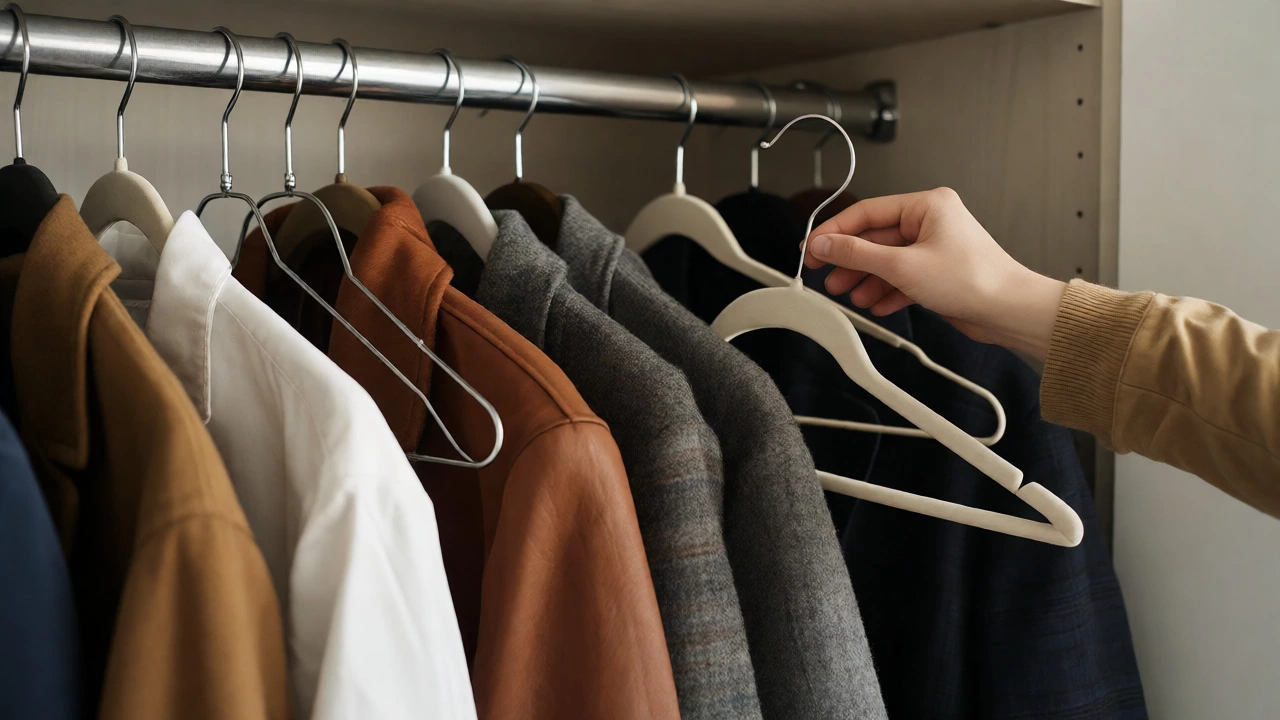
You might be thinking, "I hang everything, so why does my wardrobe look chaotic?" It’s likely your hangers. Using mismatched hangers or thin plastic ones causes jackets to slip off or bunch together. In small apartments in cities like Limerick or Waterford, space is premium real estate. You need efficiency.
| Jacket Type | Recommended Hanger | Why? |
|---|---|---|
| Suit/Blazer | Wide Wooden/Padded | Mimics natural shoulder slope; prevents divots. |
| Leather/Suede | Broad Plastic/Wooden | Distributes weight evenly; avoids creasing. |
| Wool Coat | Sturdy Wooden | Supports heavy weight without bending. |
| Puffer/Down | Velvet (Short Term) / Folded (Long Term) | Prevents compression of insulation during storage. |
| Fleece/Knit | N/A (Fold) | Gravity stretches necklines and shoulders. |
Notice the pattern? Weight and structure dictate the tool. Don’t use wire hangers for anything except holding a shirt in a hotel room. Buy a set of matching wooden hangers from a local homeware shop or online retailers delivering across Ireland. Uniformity makes your closet look bigger and helps you see what you actually own.
Dealing with Irish Humidity and Storage Solutions
Living in Ireland means battling dampness. Even in modern houses, condensation happens. If you store jackets in a spare room or attic, mold is a silent killer. Mold loves dark, enclosed spaces with trapped moisture.
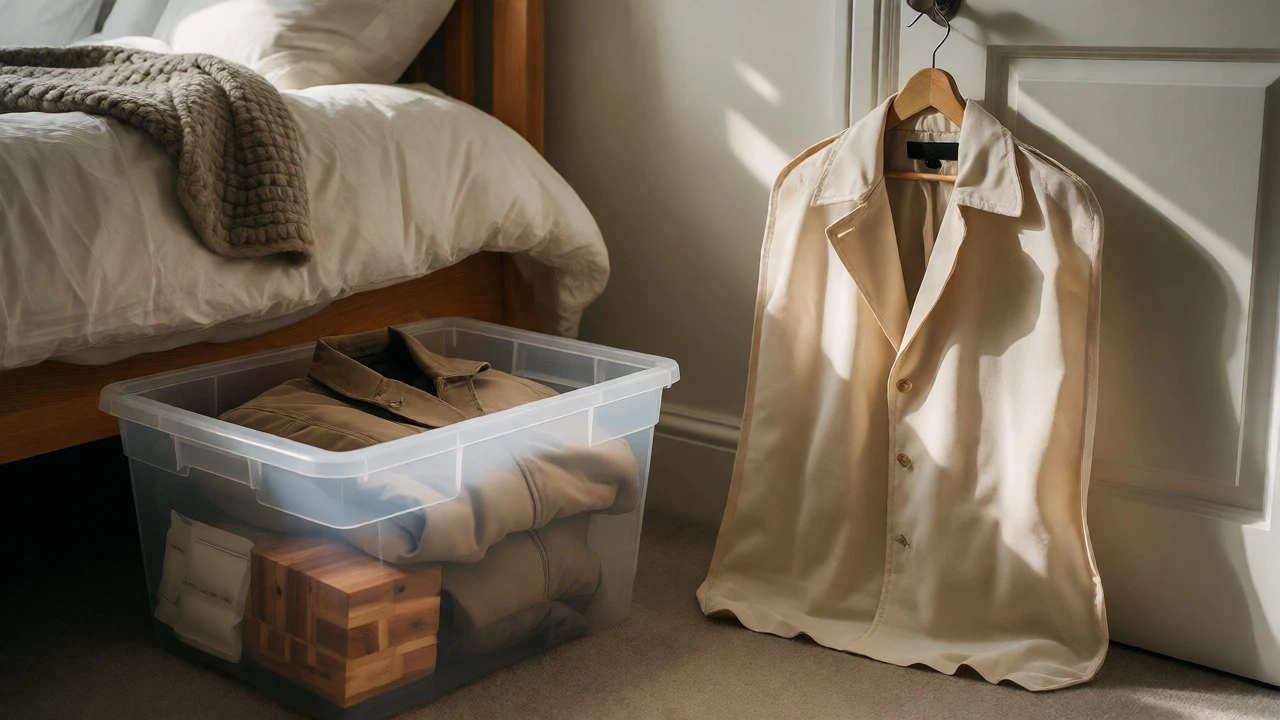
For seasonal storage, avoid cardboard boxes. They absorb moisture and offer zero protection against pests. Instead, use breathable cotton garment bags for hanging items. For folded items like puffers, use clear plastic bins with lids, but throw in a silica gel packet or a cedar block. Cedar repels moths and absorbs some moisture, which is handy given our damp climate. Moths love cashmere and wool, common materials in Irish winter wardrobes. Check your coats twice a year for holes.
If you live in a period property with drafty windows, keep delicate silks or leathers away from direct sunlight and radiators. Heat dries out leather, causing cracking. Cold drafts can make synthetic fabrics brittle over years. Find a middle ground-a cool, dry corner of your bedroom closet is usually safest.
Practical Tips for Small Spaces
Not everyone has a walk-in wardrobe. Many of us are dealing with narrow hallways or shared bedrooms. Here’s how to maximize space without ruining your clothes.
- The Cascade Method: Use multi-hangers that clip onto each other vertically. Great for lighter jackets like denim or thin raincoats. Not suitable for heavy wool coats as they become unstable.
- Over-the-Door Organizers: Perfect for lightweight vests, gilets, or scarves. Keeps them accessible for sudden temperature drops.
- Under-Bed Bins: Ideal for off-season bulky items. Flatten puffer jackets slightly (don’t compress fully) and place them in flat bins. Label them clearly. You don’t want to dig through January snow to find your summer windbreaker.
- Top Shelf Strategy: Reserve the highest shelf in your wardrobe for items you rarely wear. Stack folded sweaters and casual jackets there. Keep daily-wear jackets on the rail at eye level.
Consider the "one in, one out" rule. Irish retail parks are tempting, especially during sales. Before buying another jacket, ask yourself: do I have space for it? If not, donate the old one. Charity shops in towns like Galway City or Cork accept good quality coats, giving them a second life instead of letting them gather dust in your cupboard.
When in Doubt, Test It
Still unsure about a specific piece? Try this test. Take the jacket and fold it gently in half, then unfold it. Wait five minutes. If the creases disappear quickly, it’s safe to fold. If deep lines remain, hang it. Another trick: check the label. High-end brands often specify "hang to dry" or "do not tumble dry," which hints at structural integrity issues.
Remember, your wardrobe reflects your lifestyle. If you commute by bus or train, keeping your coat on a hook by the door is practical, even if it’s not perfect. Just ensure it’s aired out regularly. Bring it inside, open the zip, and let it breathe. Don’t leave it crumpled on a seat all day.
Ultimately, taking care of your jackets extends their lifespan significantly. A well-maintained coat lasts ten years or more. In a country where fashion trends come and go, but quality staples remain, investing time in proper storage pays off. You save money, reduce waste, and always look put-together, even when the sky turns grey for the third day in a row.
Can I hang a puffer jacket?
You can hang a puffer jacket for short periods, such as during the winter season when you are wearing it frequently. However, for long-term storage (like putting it away for summer), it is better to fold it. Hanging compresses the down insulation at the bottom of the hanger, creating cold spots where the feathers lose their loft. If you must hang it, use a wide, padded hanger to distribute the weight evenly.
How do I prevent my leather jacket from cracking?
Always hang leather jackets on a broad, sturdy hanger to maintain their shape and avoid creases that can turn into cracks. Store them in a cool, dry place away from direct heat sources like radiators, which dry out the leather. Condition the leather every six months with a product designed for genuine leather to keep it supple. Avoid plastic covers, as they trap moisture; use a breathable cotton garment bag instead.
What is the best way to store wool coats in Ireland's damp climate?
Ensure the coat is completely dry before storing it to prevent mold and mildew. Hang it on a sturdy wooden hanger in a ventilated area. If storing in a closet, leave some space around it for air circulation. Consider using cedar blocks or lavender sachets to deter moths and absorb excess moisture. Avoid sealing wool coats in airtight plastic containers for long periods, as they need to breathe.
Do wire hangers damage jackets?
Yes, wire hangers can cause significant damage. Their narrow width creates pressure points on the shoulders of structured jackets like blazers and suits, leading to permanent "shoulder bumps." They also lack the strength to support heavy coats, causing them to bend or snap. Replace wire hangers with wide wooden or padded velvet hangers for better support and shape retention.
Should I fold or hang a denim jacket?
Denim jackets are durable and can be either folded or hung. Hanging them preserves their shape and prevents creases, making them ready to wear. However, if you have limited closet space, folding them is acceptable as denim is resistant to wrinkling compared to finer fabrics. If you fold them, stack them neatly to avoid crushing the pockets or buttons.