Irish Slipper Selector
Not sure which slippers will keep your feet warm without slipping or overheating? Answer these questions to get a tailored recommendation based on Irish housing conditions.
Recommended Material
Recommended Sole
There is a specific kind of cold that settles into your bones when you step out of a hot shower in Galway or Dublin. It’s not just air temperature; it’s the damp chill of an old stone house or the drafty corners of a semi-detached in Cork. If you’ve ever stood on a tiled kitchen floor in January, toes curling, wondering why your feet feel like ice blocks, you know exactly what I mean. Choosing the right pair of slippers isn’t just about looking cozy; it’s a survival tactic for anyone living in Ireland.
But walk into any shop from Penneys to Brown Thomas, and you’re hit with a wall of options. Faux fur? Wool felt? Memory foam? Leather soles? Rubber bottoms? It’s overwhelming. Most people grab the first fluffy thing they see, only to find their feet sweating by February or slipping on the laminate flooring three days later. Here is how to actually pick a pair that works for our weather, our homes, and our bodies.
Understand Your Home Environment First
Before you look at styles, look at your floors. This sounds obvious, but it’s where most people go wrong. In Ireland, we have a mix of housing types that drastically changes slipper needs.
If you live in a new-build estate in Naas or a modern apartment in Dublin 4, you likely have underfloor heating or high-quality insulation. Here, breathability matters more than insulation. You don’t want thick wool trapping heat if your house is already 21°C. A lightweight cotton or bamboo blend will keep your feet comfortable without overheating.
On the other hand, if you’re in a Victorian terrace in Limerick or a farmhouse in Donegal, the floors are probably solid concrete or old timber. These surfaces stay cold long after the heating goes off. For these homes, you need thermal mass. Thick wool felt or sheepskin-lined slippers act as insulators, blocking the cold ground from sucking the heat out of your soles. If you have hard floors and no rugs, prioritize sole thickness over upper material.
The Sole Debate: Hard vs. Soft
This is the biggest pain point for Irish consumers. We love the idea of leather-soled slippers because they look classy and breathe well. But here’s the reality: untreated leather soles are slippery on polished wood or tile. If you have kids running around or elderly parents visiting, a leather sole can be a hazard.
| Sole Type | Grip Level | Durability | Best For |
|---|---|---|---|
| Leather | Low (Slippery) | High (Molds to foot) | Carpets, Rugs, Dry Floors |
| Rubber/EVA | High | Medium | Kitchens, Bathrooms, Tile/Wood |
| Felt/Fabric | Medium | Low (Wears thin) | Short-term wear, Low impact |
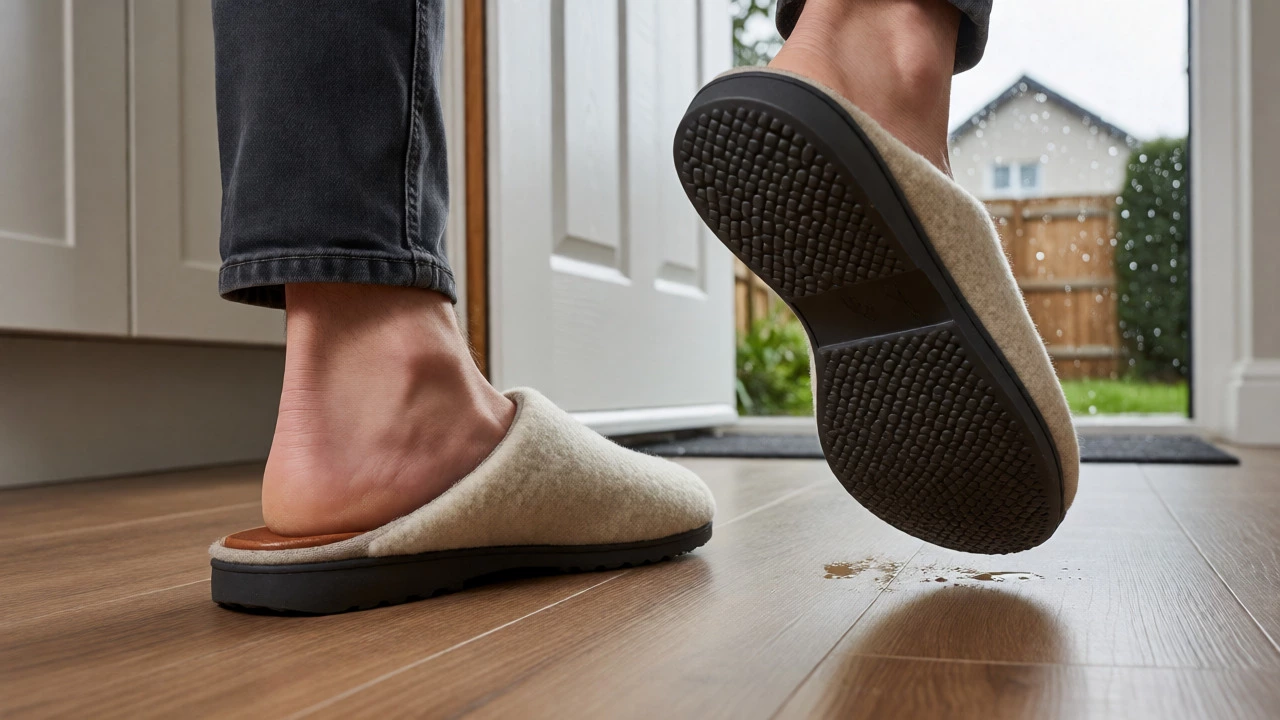
If you spend time in the kitchen making tea or washing up, get rubber-backed slippers. Brands like Minnetonka or local Irish makers often offer hybrid designs-soft uppers with grippy bottoms. This allows you to step outside to check the post or take bins out without ruining your slippers or slipping on wet pavement.
Material Matters: Why Wool Wins in Ireland
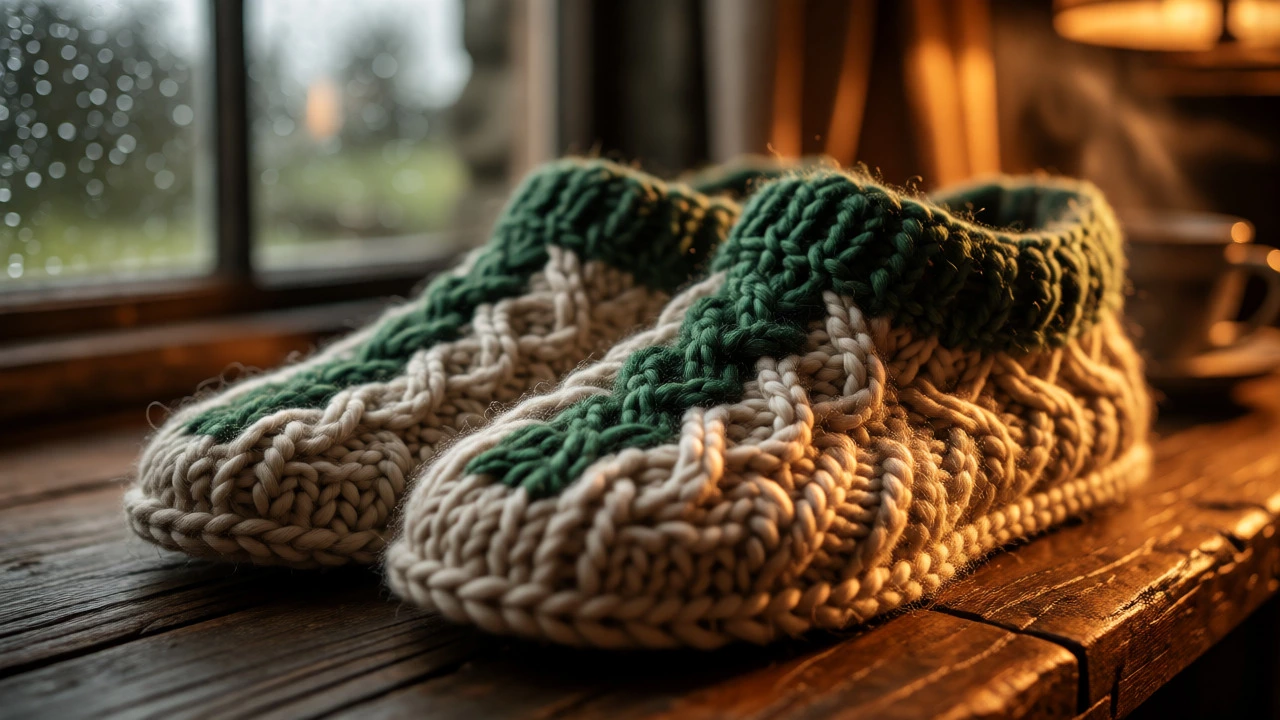
You might be tempted by synthetic fleece. It’s cheap, soft, and looks great online. But synthetics trap moisture. When your feet sweat-which they do, even in winter-that sweat has nowhere to go. The result? Cold, clammy feet and potential fungal issues. In Ireland’s humid climate, this is a real problem.
Merino wool is superior for two reasons: thermoregulation and odor resistance. Merino fibers wick moisture away from the skin while keeping warmth in. Even if your feet sweat, the wool stays dry against the skin. Plus, natural lanolin in the wool resists bacteria, meaning your slippers won’t smell bad after a week of wear.
Look for products labeled "100% pure new wool" rather than blends. Many cheaper "wool" slippers are 60% acrylic. Check the care label. If it says "machine washable," ensure it’s specifically designed for it, as regular wool shrinks. Some Irish brands, like John Hanly or artisan makers on Etsy, use traditional Aran knitting techniques which add extra density and warmth.
Fit and Support: Not Just About Size
Your feet swell during the day. A slipper that fits perfectly at 8 AM might be tight by 8 PM. Always try slippers on in the evening. Also, consider the shape. Traditional moccasin-style slippers have little arch support. If you have flat feet or plantar fasciitis, wearing unsupportive slippers all day can cause knee and hip pain.
For those with medical needs, look for slippers with removable insoles. This allows you to insert custom orthotics. Podiatrists in Dublin and Cork often recommend this for patients who stand on hard floors for work-from-home setups. Avoid slippers that pinch the toes; leave about half a centimeter of space at the front. Your toes need room to wiggle to maintain circulation.
Style and Versatility: From Bed to Bin
In rural Ireland, you might need slippers that can handle a quick trip to the garden or the garage. In urban apartments, you might want something stylish enough to answer the door in. There’s a growing trend toward "hybrid" slippers-designs that look like casual loafers but have soft interiors.
Consider the closure. Open-back slippers are easy to slip on and off, perfect for quick tasks. Closed-back slippers provide better heel security and warmth but can be annoying to put on repeatedly. If you have mobility issues, open-back with a wide opening is safer. For colder nights, closed-back is non-negotiable.
Where to Buy: Supporting Local vs. Big Retail
Ireland has a rich tradition of textile manufacturing. Buying locally supports jobs and ensures quality. Look for brands that source wool from Irish farms. The Irish Wool Mark is a good indicator of authenticity. While big chains like Primark offer cheap options, they often lack durability and ethical transparency.
Independent shops in towns like Westport or Kinsale often stock handmade slippers that last years longer than mass-produced ones. Yes, they cost €30-€50 instead of €10, but calculate the cost per wear. A €40 pair lasting five years costs less than buying four pairs of €10 slippers that fall apart each winter.
Care Instructions to Extend Life
Wool slippers need maintenance. Don’t throw them in the dryer. Air dry them away from direct radiators, which can shrink and crack the fibers. Use a shoe tree or stuff them with newspaper to maintain shape overnight. For rubber soles, wipe down with a damp cloth weekly to prevent grime buildup. If you have suede accents, use a suede brush monthly to restore the nap.
Rotating between two pairs helps. Letting one pair rest for 24 hours allows moisture to evaporate fully, extending the life of the materials. This simple habit keeps your slippers fresh and prevents that musty smell common in poorly ventilated homes.
Are memory foam slippers good for Irish winters?
Memory foam provides excellent cushioning but retains heat heavily. In well-insulated modern homes, they can make feet sweaty. In older, drafty houses, they are great for comfort. However, memory foam doesn't wick moisture like wool, so pair them with breathable socks or choose models with ventilation channels.
Can I wear slippers outside in Ireland?
Generally, no. Most indoor slippers have soles that absorb water and degrade quickly on wet pavement. Unless you buy specifically designed "indoor/outdoor" hybrids with waterproof rubber soles, stick to wearing proper outdoor shoes for checking mail or taking bins out. Irish rain ruins fabric soles rapidly.
How often should I replace my slippers?
Replace them when the sole wears thin or the interior lining loses its loft. Typically, daily-wear slippers last 1-2 years. If you notice uneven wear patterns or reduced grip, replace them immediately to prevent slips and falls, especially important for older adults in Ireland.
What is the best slipper for arthritis?
Look for slippers with rigid heels and arch support, such as supportive clogs or structured loafers. Avoid floppy, unstructured moccasins. Removable insoles allow for custom orthotics, which podiatrists often prescribe. Ensure the opening is wide enough to avoid bending joints excessively when putting them on.
Do Irish-made slippers differ from imported ones?
Yes, particularly in wool quality. Irish manufacturers often use locally sourced merino or lambswool, which is finer and softer than generic wool imports. They also tend to construct soles with more robust stitching methods suited to damp conditions, whereas some imported fast-fashion slippers use glued soles that separate easily in humidity.