Leather Shoe Health Check
Enter details about your stored leather shoes to receive a personalized health report and care recommendations tailored to the damp Irish climate.
Primary Risk Identified
Visible Symptoms to Look For
Recommended Actions
You’ve bought a lovely pair of leather shoes from a shop on Grafton Street or perhaps a sturdy pair from Clarks. They sit in the back of your wardrobe, untouched for months, maybe even years. You think you’re saving them for a special occasion, but while they sleep, something is happening to them. It’s not just dust gathering. In Ireland’s damp, mild climate, unused leather undergoes a chemical and physical transformation that can ruin the shoe before you ever slip it on.
Here is the uncomfortable truth: leather is skin. It needs air, movement, and moisture balance to stay healthy. When you stop wearing it, especially in places like Galway or Dublin where humidity hovers high year-round, the material begins to dry out, crack, or worse, develop mold. This isn’t about neglect; it’s about biology. Let’s look at exactly what happens to your investment when it stays idle, and how to fix it before it’s too late.
The Chemistry of Neglect: Why Leather Needs Movement
Think of leather like your own skin. It has pores. It breathes. When you wear shoes, your feet generate heat and slight moisture, which keeps the fibers flexible. The act of walking flexes the sole and upper, preventing the material from setting into rigid shapes. Without this mechanical action, the collagen fibers in the hide begin to stiffen.
In Ireland, the ambient humidity plays a tricky role. While high humidity might seem good for hydration, without circulation, it creates a stagnant environment. If you live in a coastal town like Cork or Limerick, salt air can also settle on the leather, drawing out natural oils over time. The result? The leather loses its elasticity. It becomes brittle. You might notice fine cracks appearing around the toe box or the heel counter, areas that naturally crease during use. These aren’t just cosmetic; they are structural failures waiting to happen.
Mold and Mildew: The Irish Enemy
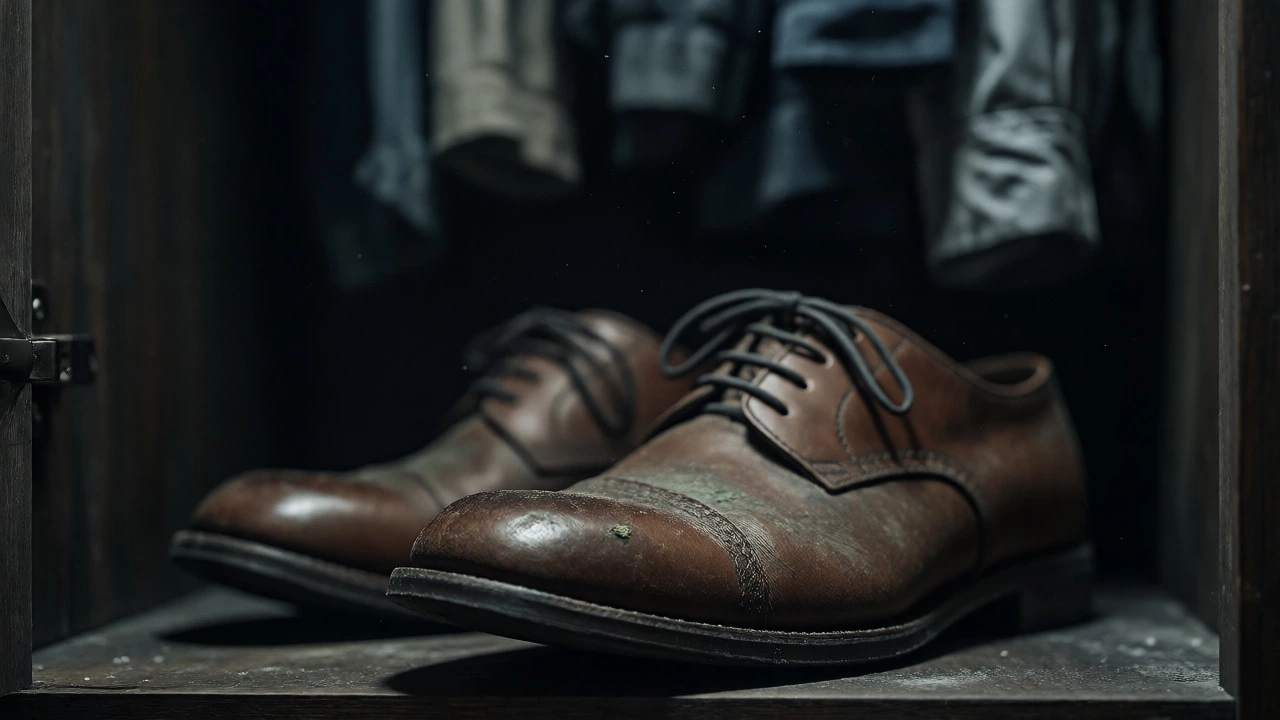
If there is one thing Irish residents know well, it’s dampness. Whether it’s condensation on windows in winter or that persistent drizzle in spring, our homes often retain moisture. Leather is porous. It absorbs this ambient water vapor. If your shoes are stored in a dark, unventilated cupboard-common in many older terraced houses in Dublin or Belfast-the lack of airflow allows fungal spores to thrive.
You might open your shoebox after six months and find white or greenish spots on the leather. That’s mildew. It eats away at the finish and can penetrate deep into the grain. Once mold roots take hold, cleaning them off is difficult and often leaves permanent staining. In humid Irish winters, this risk skyrockets. If you’re storing shoes in an attic or a spare room that gets cold, the temperature fluctuations cause condensation inside the shoe, creating a perfect breeding ground for bacteria and fungi.
Sole Separation and Adhesive Failure
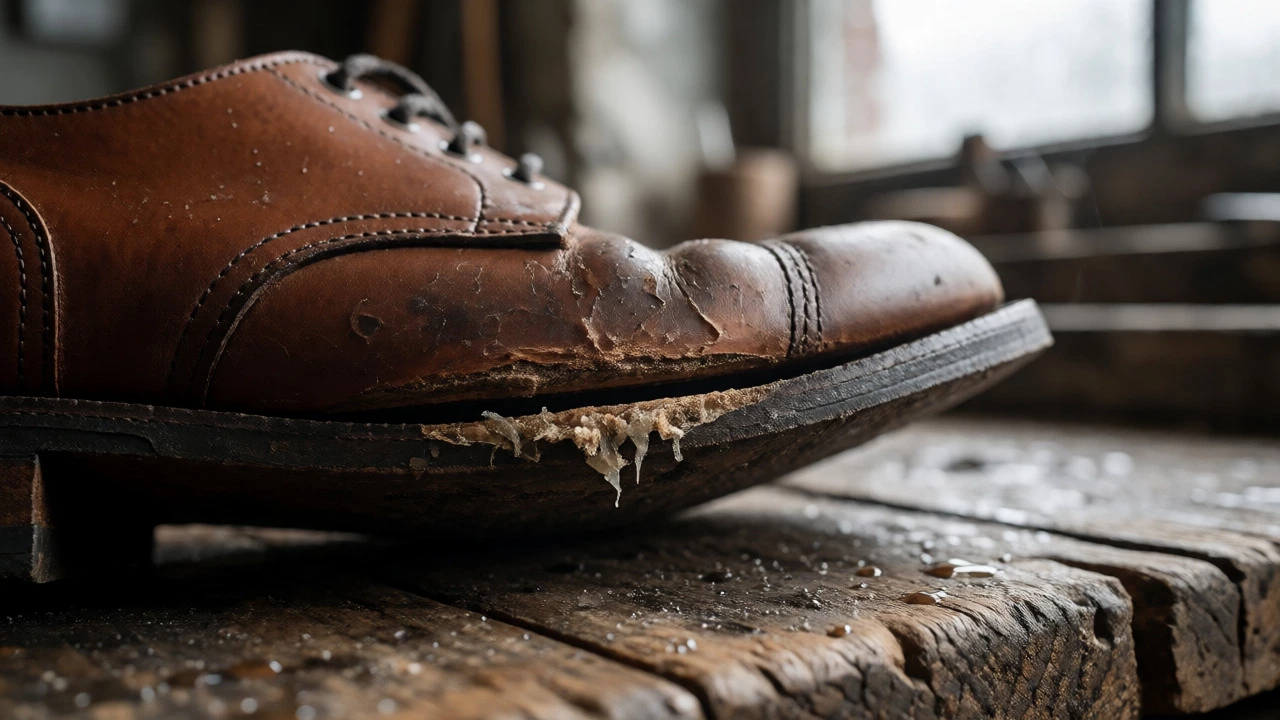
Modern leather shoes, particularly those from brands like Clarks, Hush Puppies, or even higher-end makers like Church’s, rely heavily on adhesives to bond the sole to the upper. Glue is not eternal. It degrades over time, a process known as hydrolysis.
Surprisingly, wearing shoes regularly helps slow this down because the constant flexing keeps the adhesive pliable. When shoes sit still, the glue hardens and becomes brittle. Eventually, it crumbles. You’ll pick up your favorite loafers, step out, and feel the sole flap loose. This is common with polyurethane soles, which are lightweight but prone to this type of decay if left unused for more than two years. In Ireland, where we often buy one good pair of boots for winter and leave them until the next, this separation is a frequent complaint among repair shops in Galway city.
Drying Out and Cracking
Conversely, if your storage area is too dry-perhaps near a radiator in a heated living room-the leather can lose its natural oils faster than it gains moisture from the air. Leather contains fats and waxes that keep it supple. Without the occasional conditioning (which usually happens naturally through foot oils and regular polishing), these lipids evaporate.
The signs are subtle at first: the leather looks dull, matte, and feels rough to the touch. Then come the cracks. These often appear along the vamp (the front part of the shoe) where the foot bends. Once cracked, the integrity of the waterproof barrier is compromised. Rain gets in, drying out the inner lining, leading to a cycle of damage that is expensive to reverse. A cobbler in Kilkenny might tell you that re-hydrating severely dried leather rarely restores it to its original luster.
| Duration Unused | Primary Risk | Visible Symptoms | Irish Context Factor |
|---|---|---|---|
| 1-3 Months | Surface Dust & Slight Stiffening | Dull appearance, minor creases set in | Normal seasonal rotation; low risk if aired out |
| 6-12 Months | Mildew & Oil Loss | Faint mold spots, leather feels dry/hard | High humidity in autumn/winter promotes fungal growth |
| 1-2 Years | Adhesive Hardening & Deep Drying | Soles feel stiff, potential cracking at flex points | Temperature swings in unheated rooms accelerate glue decay |
| 2+ Years | Sole Separation & Structural Failure | Glue lines visible, soles flapping, severe cracks | Hydrolysis of PU soles is advanced; repair may be uneconomical |
How to Store Shoes Properly in Ireland
So, does this mean you must wear every pair daily? No. But you do need to manage their downtime. Here is a practical guide tailored for Irish homes, which often have limited ventilation compared to warmer climates.
- Air Them Out: Never put wet or sweaty shoes straight into a box. Leave them in a dry, shaded spot for 24 hours first. Use shoe trees made of cedar wood. Cedar absorbs excess moisture and maintains shape. Avoid plastic shoe trees, which trap humidity against the leather.
- Condition Regularly: Even if you don’t wear them, apply a quality leather conditioner twice a year. Products like Saphir Renovateur or local alternatives available in haberdasheries in Dublin feed the leather. This prevents the drying and cracking described above.
- Control Humidity: If you store shoes in a closet, consider placing a small silica gel packet nearby. In very damp parts of western Ireland, a dehumidifier in the main living area helps indirectly by lowering overall household moisture levels.
- Rotate Your Wardrobe: Try to rotate between two pairs of dress shoes. This gives each pair 24-48 hours to dry completely between wears, extending their life significantly.
Reviving Neglected Leather
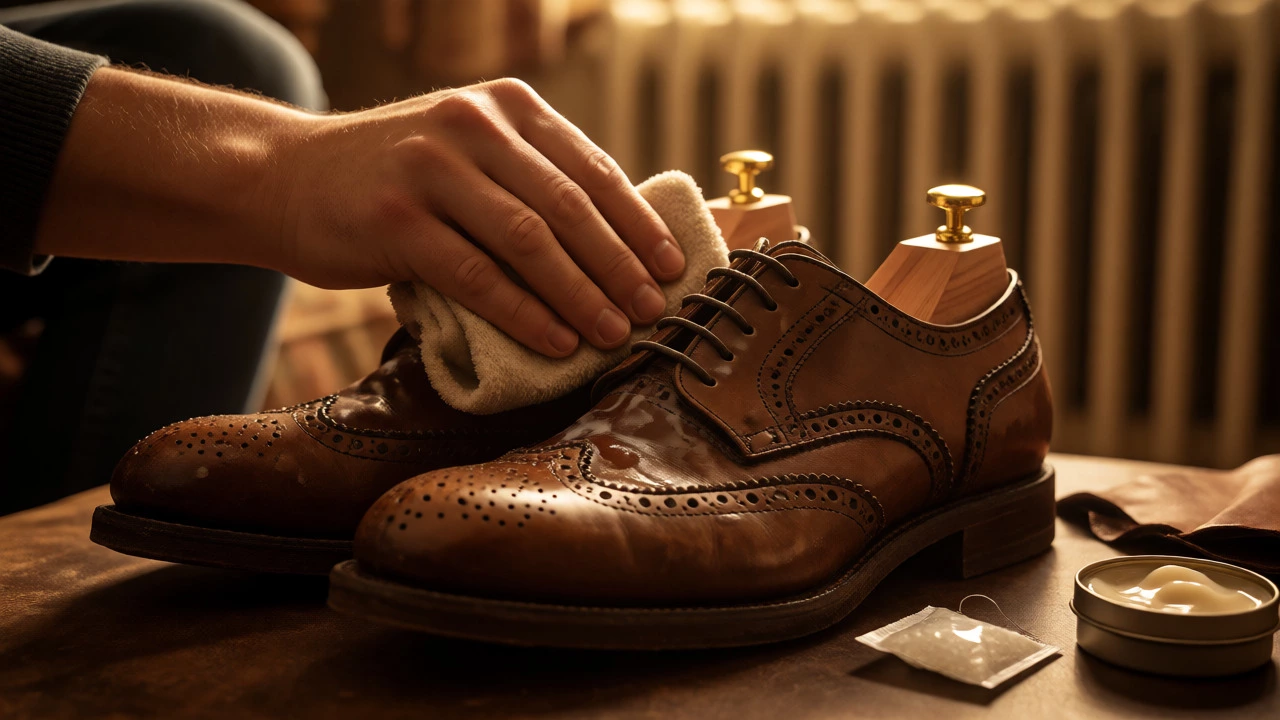
Found a pair of brogues from your wedding five years ago? All hope isn’t lost. Start by brushing off any surface mold with a soft horsehair brush outdoors to avoid spreading spores indoors. Wipe with a damp cloth mixed with a tiny bit of vinegar (test on an inconspicuous area first) to kill remaining fungus. Let them dry fully.
Next, apply a generous amount of leather cream or conditioner. Massage it in gently. You might need to do this two or three times over several days as the dry leather drinks it up. For the sole, check for gaps. If the glue hasn’t fully failed, a professional cobbler can re-glue it. Many independent cobblers in towns like Athlone or Sligo offer this service for a fraction of the cost of new shoes. If the cracks are deep, accept that the aesthetic will change, but the shoe can still be wearable for casual settings.
When to Buy New vs. Repair
In the Irish market, leather goods are an investment. Prices for quality footwear have risen due to supply chain issues affecting materials from Europe. Before spending €200+ on a replacement, assess the damage. If the upper is intact and only the sole is separating, repair is almost always the better choice environmentally and financially. However, if the leather itself is crumbling or deeply cracked across the entire surface, the structural integrity is gone. At that point, no amount of polish will save it. Consider donating usable pairs to charity shops like Oxfam or local community groups, which is a common practice here, rather than throwing them away.
Does leaving leather shoes unused make them shrink?
No, leather doesn't shrink significantly from disuse alone. However, it can warp if stored improperly, such as being crushed under other items or exposed to excessive heat, which causes fibers to contract unevenly. Using shoe trees prevents this warping.
Is mold on leather shoes dangerous to my health?
While generally not life-threatening, mold spores can trigger allergies or respiratory issues, especially for those with asthma. In damp Irish homes, it's wise to clean moldy shoes outdoors and wash hands thoroughly after handling them.
Can I use olive oil to condition old leather shoes?
It's risky. Olive oil can go rancid over time, attracting dirt and causing the leather to darken permanently. It's better to use dedicated leather conditioners or neatsfoot oil, which are designed to stabilize and preserve the hide without spoiling.
How long can leather shoes last if worn regularly versus stored?
A well-maintained pair of leather shoes worn regularly can last 5-10 years or more. Stored unused, they may deteriorate structurally within 2-3 years due to glue degradation and leather drying, regardless of how little they were walked in.
Should I stuff newspaper in unused leather shoes?
Newspaper can absorb some moisture and help maintain shape, but the ink can transfer onto light-colored linings. Acid-free tissue paper or cedar shoe trees are superior options for long-term storage in humid conditions.