Irish Home Slipper Finder
Not sure if you need hard or soft slippers? Answer these quick questions to find your perfect match for your Irish home.
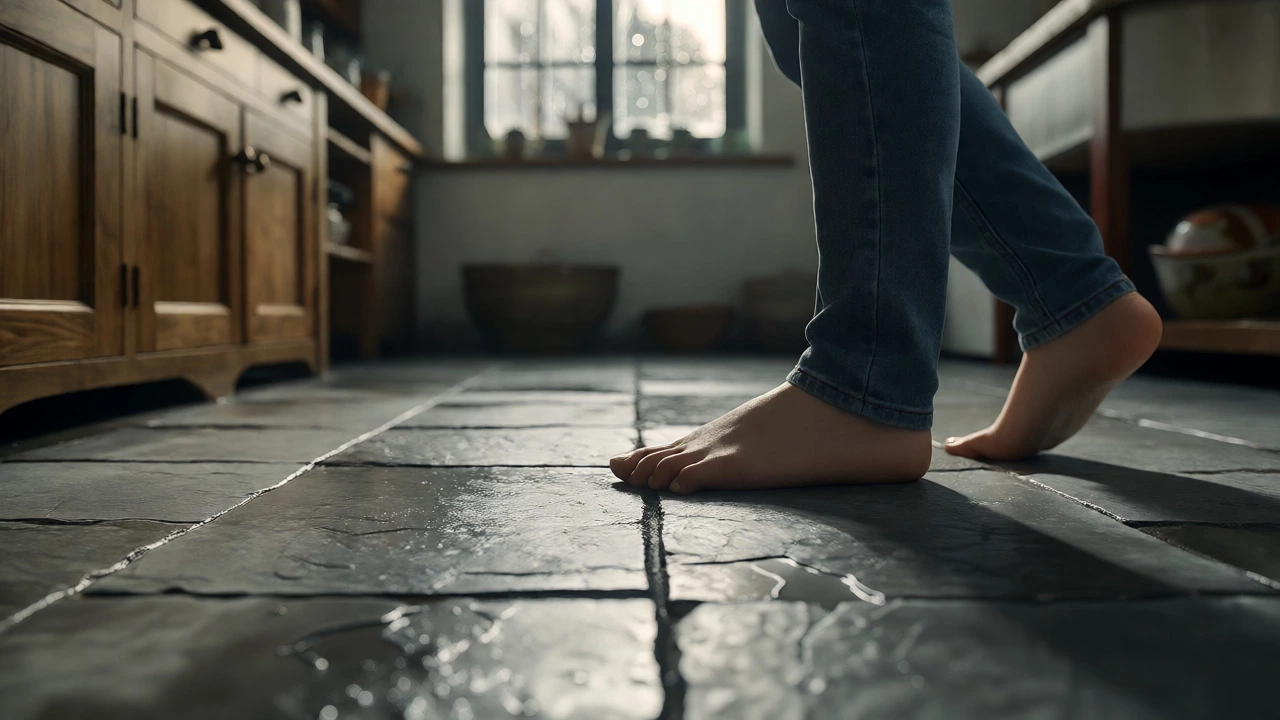
Walking barefoot on a cold kitchen tile in Dublin or Cork during a damp January morning is a sensation that sticks with you. It’s not just about warmth; it’s about how your feet feel when they hit the floor after a long day of standing or walking. The debate over whether slippers should be hard or soft isn’t just a matter of personal preference-it’s a question of foot health, home flooring types, and even our local climate. In Ireland, where we spend a significant amount of time indoors due to the weather, getting this choice right can make or break your comfort at home.
Most people assume softer is always better. If it feels like stepping into a cloud, surely that’s the goal? But here’s the twist: for many Irish homes, especially those with older stone floors or modern open-plan layouts with large tiled areas, ultra-soft foam slippers might actually be causing more harm than good. Let’s break down why firmness matters, what works best for different foot types, and how to choose the right pair for your specific living situation in Ireland.
The Myth of "Soft Equals Comfortable"
We’ve all been sold the idea that maximum cushioning equals maximum comfort. You go into a shop, squeeze a memory foam slipper, and think, "This is it." But once you wear them for six months, do your heels still feel fine? Often, no. Soft materials compress quickly. Once that initial squishiness disappears, you’re left with a flat, unsupportive shell that offers zero stability.
In contrast, firmer slippers maintain their shape. They provide a stable platform for your foot. Think of it like a mattress: a cheap, overly soft foam bed might feel nice for one night, but it lacks the structural integrity to support your spine over time. The same logic applies to your feet. If you have flat feet or plantar fasciitis, sinking too deeply into a soft sole can strain your arches rather than support them.
Understanding Foot Mechanics and Slipper Firmness
Your foot is a complex structure of bones, ligaments, and muscles. When you walk, your foot rolls inward (pronation) to absorb shock. If your slipper is too soft, it allows excessive rolling. This can lead to pain in the knees, hips, and lower back. On the flip side, if a slipper is too hard-like a wooden clog without padding-it doesn’t absorb any shock, sending every impact straight up your legs.
The sweet spot lies in firm support with a touch of cushioning. Look for slippers with a dense EVA (ethylene-vinyl acetate) midsole or cork footbeds. These materials offer resistance, meaning they push back against your foot slightly, providing the feedback your brain needs to maintain balance and proper posture.
- For Flat Feet: Avoid super-soft foam. Choose slippers with a defined arch support and a firmer sole to prevent over-pronation.
- For High Arches: You need shock absorption. A medium-firm sole with a plush top layer can help distribute weight evenly.
- For Elderly Parents: Stability is key. A harder sole reduces the risk of tripping and provides a solid base for balance.
The Impact of Irish Flooring on Your Choice
Here in Ireland, our housing stock varies wildly. If you live in a Victorian terrace in Limerick or an old cottage in Galway, you likely have original hardwood or stone floors. These surfaces are unforgiving. They don’t give way when you step on them. Using a flimsy, thin-soled slipper on these floors means your feet take the brunt of the impact.
Conversely, new builds in areas like Naas or Swords often feature large-format porcelain tiles or engineered wood. Tiles are notoriously slippery and cold. Here, the texture of the outsole matters as much as the firmness. A soft rubber sole might grip well but wear out quickly on rough grout lines. A harder, textured rubber compound lasts longer and maintains traction.
If you have underfloor heating-which is becoming standard in many Irish renovations-you might prefer a thinner, firmer slipper. Thick, fluffy slippers can insulate your feet so much that you miss out on the direct warmth from the floor, making you feel colder overall despite the heating system.
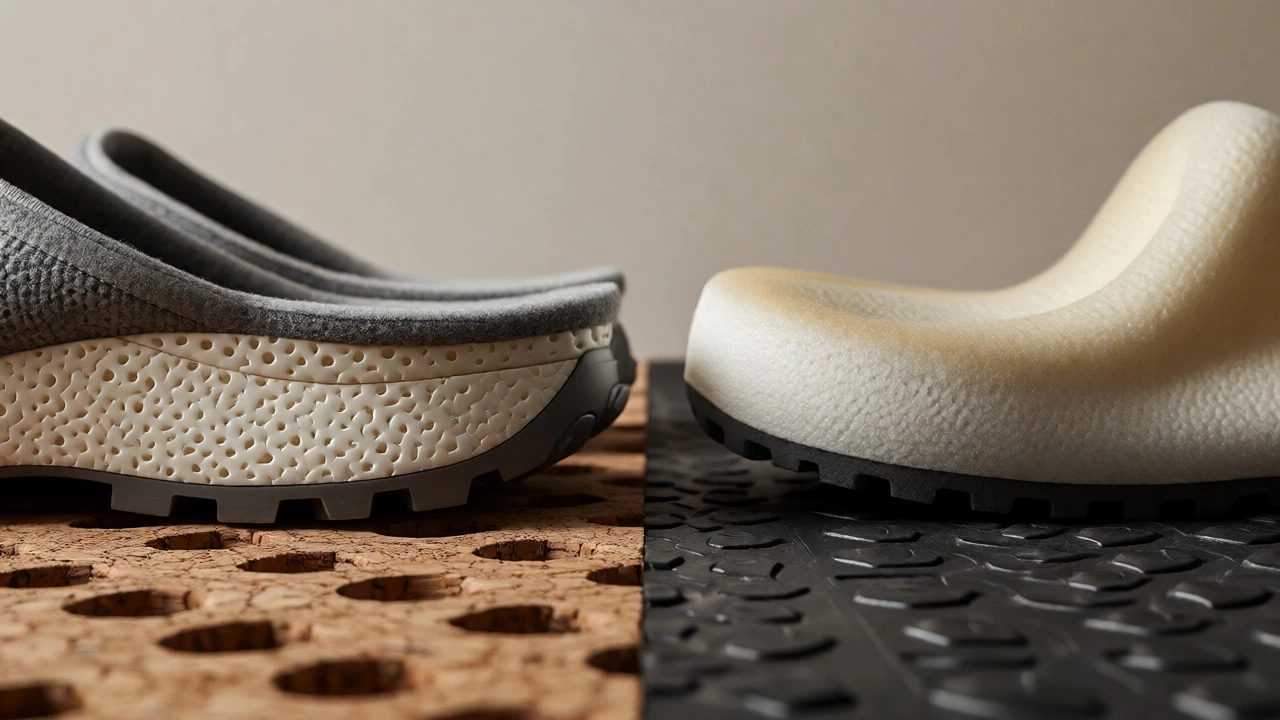
Hard vs. Soft: A Comparison Table
To help you decide, let’s look at the pros and cons of each type based on common scenarios found in Irish households.
| Feature | Firm/Hard Sole Slippers | Soft/Foam Sole Slippers |
|---|---|---|
| Arch Support | Excellent. Maintains shape and supports natural foot alignment. | Poor. Compresses quickly, leading to arch collapse. |
| Durability | High. Resists compression set and wear over years. | Low. Flattens out within 3-6 months of daily use. |
| Traction | Good, especially with textured rubber outsoles. | Variable. Can become slippery as the tread wears smooth. |
| Best For | Long periods of standing, hard floors, plantar fasciitis. | Short-term relaxation, carpeted rooms, sensitive skin. |
| Ideal Floor Type | Tile, Stone, Wood, Laminate. | Thick Carpet, Rug-heavy rooms. |
Material Matters: What Works Best?
Not all firmness is created equal. The material dictates how the slipper performs in our damp climate. Wool is a staple in Irish footwear for a reason. Brands like Ardmore or local artisans in Donegal often use sheepskin because it regulates temperature beautifully. It keeps feet warm when it’s wet outside but breathes when the central heating kicks in.
However, wool alone isn’t enough for the sole. You need a durable outer layer. Natural rubber is superior to synthetic PVC. Rubber grips better on wet floors (think of the hallway after coming in from a Galway drizzle) and doesn’t off-gas chemicals that can irritate allergies. Cork is another excellent option. It’s naturally antimicrobial, which is great for hygiene, and it molds to your foot over time while retaining structural integrity.
Avoid slippers made entirely of polyester fleece with a thin plastic sole. They trap sweat, creating a breeding ground for bacteria and fungal infections, which are prevalent in humid environments. If you must buy soft, ensure the lining is breathable cotton or wool, not synthetic pile.
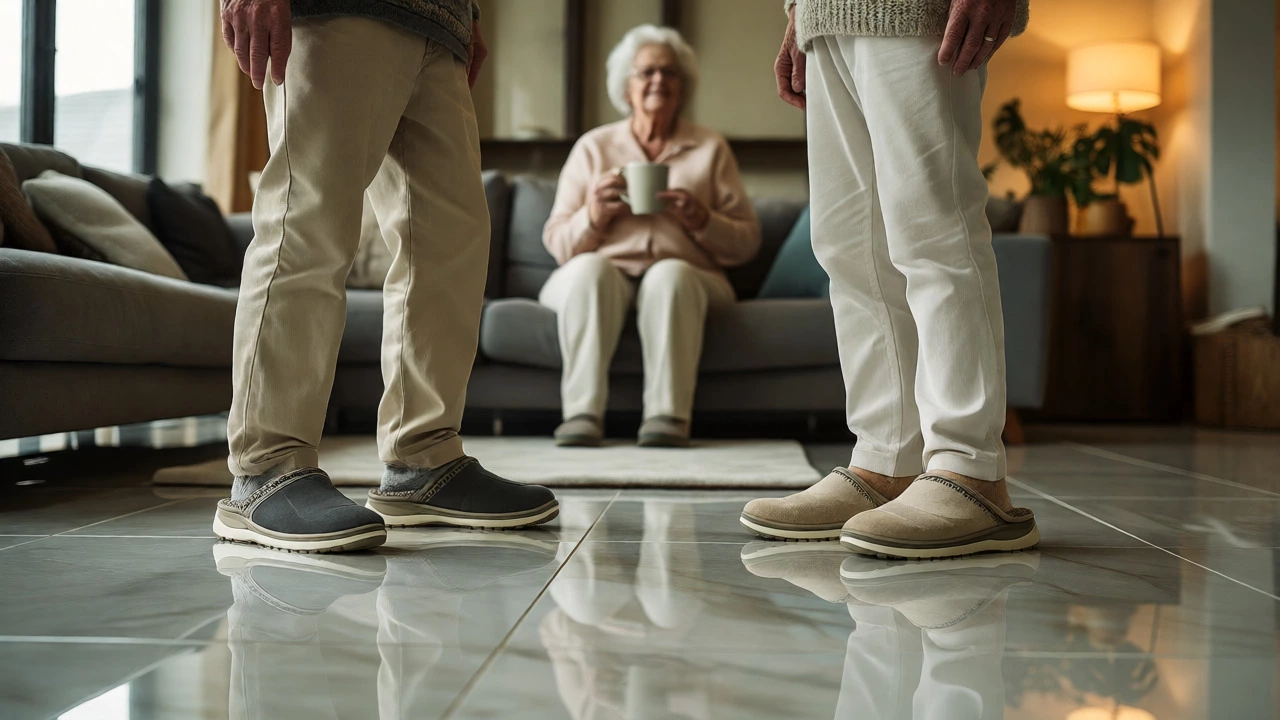
Situational Advice: When to Choose Which
Your choice should depend on what you do in your home. Are you working from the kitchen counter? Do you tend to garden in the evenings? Or do you just want to relax on the sofa?
Choose Firmer Slippers If:
- You stand for more than 30 minutes at a time (e.g., cooking, washing dishes).
- You have knee or hip pain that worsens after wearing soft slippers.
- Your home has predominantly hard flooring (tile, wood, stone).
- You are prone to slipping on smooth surfaces.
Choose Softer Slippers If:
- You live in a fully carpeted apartment or bungalow.
- You have neuropathy or extreme sensitivity to pressure points.
- You only wear them for short durations (e.g., going to bed).
- You prioritize immediate sensory comfort over long-term support.
Local Shopping Tips in Ireland
When shopping in Irish stores, test the slipper properly. Don’t just squeeze the foam. Press firmly on the heel and the ball of the foot area. If it collapses completely and takes seconds to return to shape, it’s too soft for daily wear. Look for a quick rebound.
Check the heel counter (the back part of the slipper). It should be stiff enough to hold your heel in place. If you can bend the entire slipper in half easily, it won’t provide stability. This is crucial for preventing ankle rolls, especially on uneven cobblestones if you step out briefly into your garden or patio.
Consider buying two pairs: one firmer pair for daytime activity and one softer, warmer pair for evening relaxation. This hybrid approach gives you the best of both worlds without compromising your foot health.
Caring for Your Slippers in a Damp Climate
Ireland’s humidity affects footwear longevity. Even high-quality leather or wool slippers can degrade if stored improperly. Never leave wet slippers in a pile. Air them out regularly. If you spill water on them, stuff them with newspaper to absorb moisture and maintain shape. This prevents the sole from warping, which can alter the firmness and fit.
Rotate between two pairs. This allows the internal materials to dry out completely between wears, extending the life of the cushioning and reducing odor. It’s a small habit that saves money in the long run, given the rising cost of quality footwear in the Irish market.
Are hard slippers bad for my feet?
No, provided they have some level of ergonomic shaping. "Hard" usually refers to a supportive, non-compressible sole like cork or dense rubber, not rigid wood. These materials provide necessary arch support and stability, which protects joints better than collapsing foam.
How do I know if my slippers are too soft?
If your feet ache after an hour of wear, or if the sole looks visibly flattened compared to when you bought them, they are too soft. Another sign is feeling unstable or wobbly when standing on tiptoes in them.
Do I need different slippers for carpet vs. tile?
Yes. For tile, you need a firmer sole with good traction to handle the hardness and potential slipperiness. For thick carpet, a softer sole is acceptable because the carpet itself provides cushioning and stability, reducing the need for heavy-duty support from the slipper.
Is memory foam suitable for plantar fasciitis?
Generally, no. Memory foam lacks the resistance needed to support the plantar fascia ligament. Podiatrists often recommend firmer orthotic-style slippers that limit excessive stretching of the ligament during rest.
What brands are available in Ireland for firm slippers?
Look for brands specializing in podiatric care or outdoor-inspired indoor shoes. Many Irish independent shoe shops carry European brands with cork or leather soles. Check local boutiques in cities like Dublin, Cork, and Galway for higher-quality options that last longer than supermarket varieties.