UK Toasting Simulator
Select your current location and social setting to find the most culturally appropriate phrase to use when raising your glass.
Keep it brief and maintain eye contact if traditional.
Quick Etiquette Tips
- Clinking: Avoid crossing arms in groups. In formal settings, do not clink glasses.
- Eye Contact: Essential in Ireland; optional in England, but appreciated in Scotland/Wales.
- Volume: Match the room. Loud cheers are fine in rugby clubs, quiet nods in gastropubs.
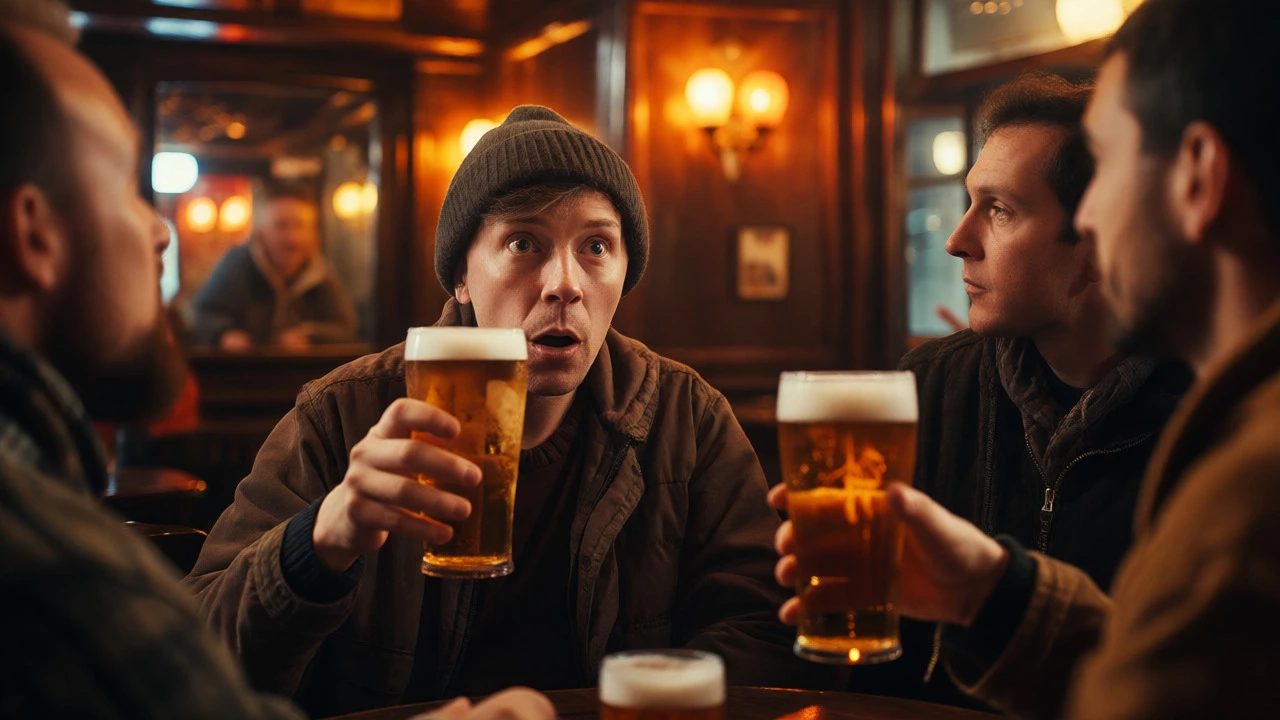
You’re standing in a cramped pub in London or Manchester, holding a pint of lager, and you raise your glass. You expect the familiar "Sláinte!" that echoes through every pub from Galway to Cork. But instead, you hear a sharp, clipped "Cheers!" or perhaps just a nod. It can feel abrupt if you’re used to the warm, lingering well-wishes of an Irish toast. If you’ve ever wondered what do Brits say when they toast?, you’re not alone. Many Irish people visiting Great Britain find themselves slightly thrown by the brevity of British drinking customs.
The truth is, there isn’t one single phrase. British toasting is a spectrum ranging from casual mumbles to formal speeches, depending entirely on who you’re with and where you are. As someone living in Ireland, I know how deeply embedded our own traditions are. We toast to health, literally translating Sláinte. The British approach is often less about the literal wish for health and more about acknowledging the shared moment. Understanding these nuances helps you navigate a night out in Birmingham, Edinburgh, or Bristol without feeling like an outsider looking in.
The Most Common British Toast: Cheers
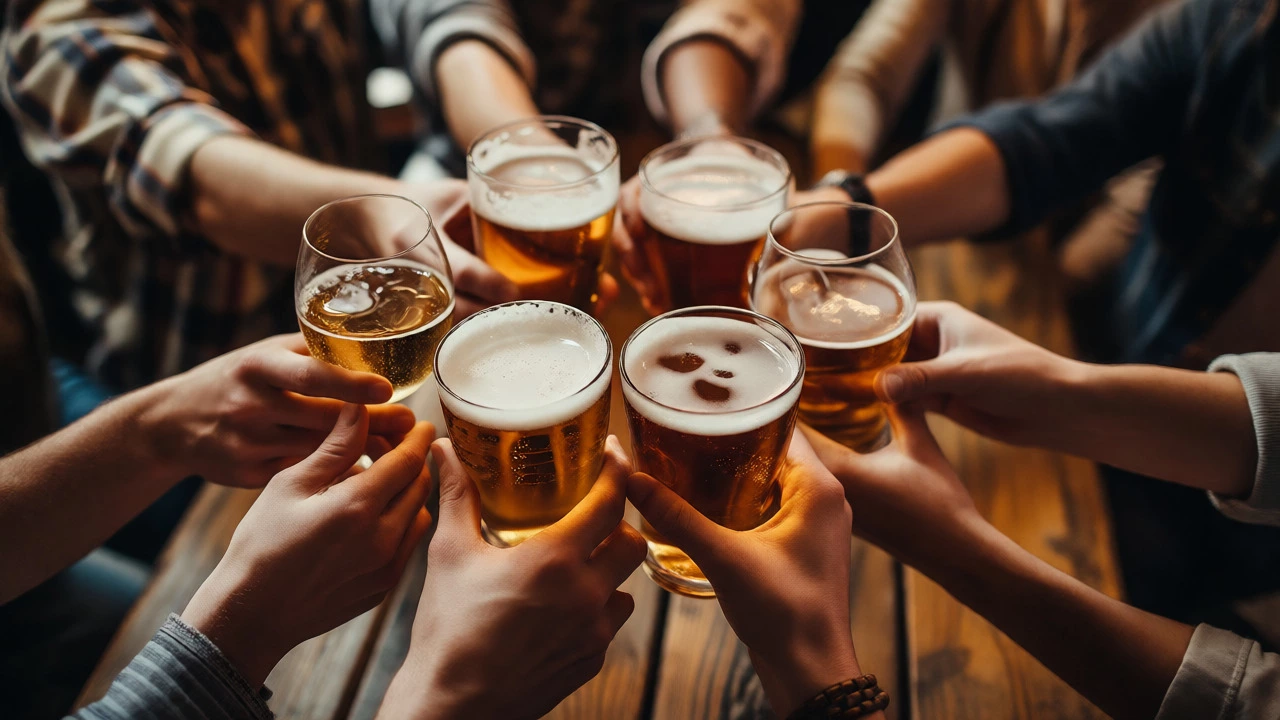
If you ask ten people in the UK what they say before taking a sip, nine will tell you it’s Cheers is the universal default for informal social drinking in the United Kingdom. It’s short, easy to say, and works whether you’re at a house party, a business lunch, or a quick drink after work. Unlike the Irish tendency to hold eye contact and wait for everyone to speak, British "cheers" can be said while clinking glasses, sometimes even while looking at the person next to you rather than directly into their eyes.
There’s a subtle difference in delivery. In many parts of England, particularly in the North, you might hear variations like "Cheers, mate" or "Cheers, love." These aren’t necessarily romantic; they’re terms of endearment used broadly across genders and ages. Don’t mistake a "Cheers, love" from a stranger in Leeds for a flirtation-it’s likely just polite acknowledgment. The key takeaway here is simplicity. You don’t need a rhyme, a reason, or a long speech. Just lift your glass, say "Cheers," and take a drink.
Regional Variations Across the UK
The UK isn’t a monolith. What you hear in Glasgow differs significantly from what you hear in London. While "Cheers" dominates everywhere, regional dialects add flavor. In Scotland, you’ll often hear Slàinte Mhath which is Scottish Gaelic for good health. This should feel comfortable for Irish travellers, as it shares roots with our own Sláinte. However, pronunciation matters. Scots often shorten it to "Slaint" or just stick to English equivalents unless they are being deliberately traditional.
| Region/Context | Phrase | Meaning/Usage Note |
|---|---|---|
| London & South East | Cheers / To you | Standard, quick, minimal eye contact required. |
| Scotland | Slàinte Mhath / Cheers | Gaelic influence remains strong in rural areas and pubs. |
| Wales | Iechyd Da / Cheers | Welsh equivalent of Sláinte, common in Welsh-speaking communities. |
| Formal Dinners | To [Name] / Health | Used during speeches; no clinking allowed. |
| Northern England | Cheers, mate / Top up? | Often combined with offers to buy the next round. |
In Wales, you might encounter Iechyd Da (pronounced roughly "Yak-ood Dah"). Like its Irish cousin, it means "Good health." If you’re travelling through Cardiff or Swansea, using this phrase earns instant respect. It shows you’ve done a bit of homework. In contrast, in large cities like Manchester or Liverpool, the language is heavily influenced by Scouse and Mancunian dialects, but the actual word remains "Cheers." The accent changes, the volume might increase, but the core ritual stays the same.
The Art of the Clink: Eye Contact and Etiquette
Here is where cultural friction happens most often. In Ireland, we pride ourselves on maintaining eye contact during a toast. It’s a sign of sincerity and connection. Break eye contact, and you risk bad luck-or worse, offending your host. In much of England, particularly among younger generations and in urban centers, eye contact during a toast is optional. Some people look at their glass. Others look around the room. It’s not considered rude; it’s just different.
However, there is a strict rule about how you clink. Never cross arms when toasting a group larger than two. If you’re in a circle of six people, you toast the person directly opposite you, then move clockwise or counter-clockwise. Crossing arms creates a "crossed toast," which some older British folks still believe brings bad luck. It’s a superstition rooted in maritime history-crossed oars meant trouble at sea. You don’t have to believe it, but respecting it avoids awkward looks from traditionalists.
Another major difference: the sound. Irish pubs encourage loud, collective toasts. British pubs vary. In a quiet gastropub in Bath, a loud "CHEERS!" might draw stares. In a rugby club in Leicester, silence would be suspicious. Match the energy of the room. If everyone is whispering their toasts, keep it low. If the table is roaring, join in.
When Not to Clink: Formal Dining Rules
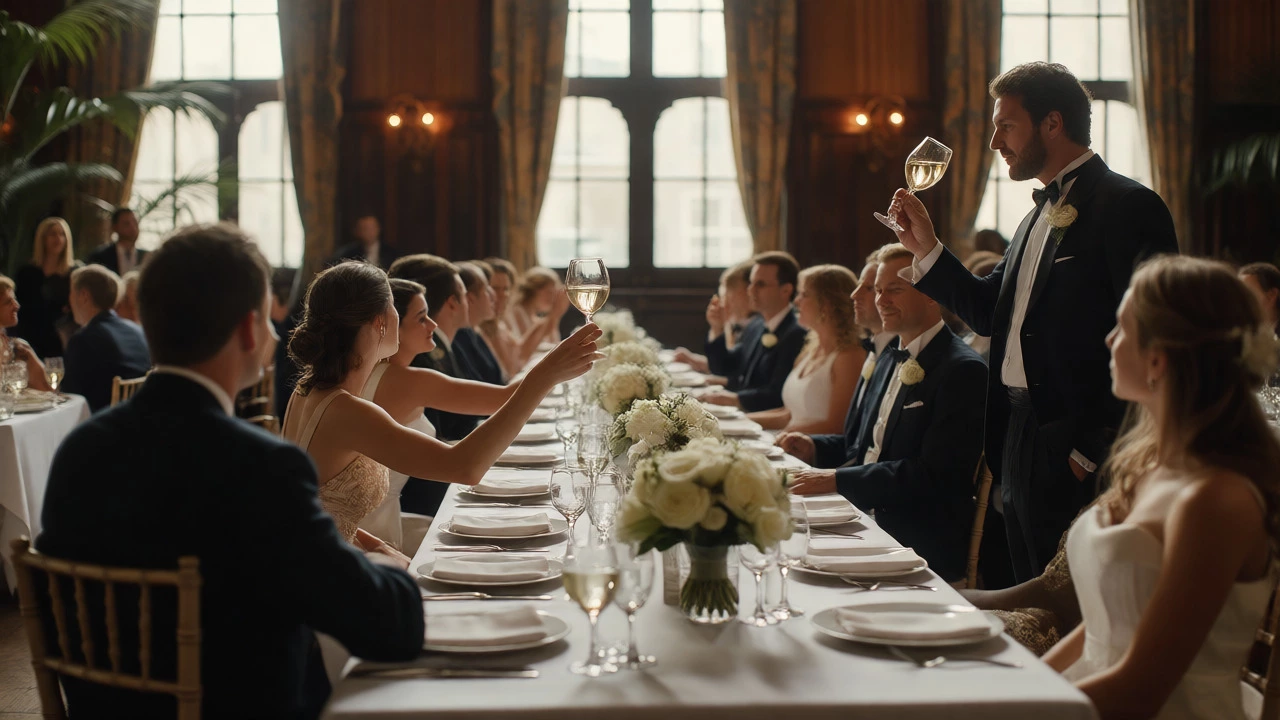
If you’re invited to a wedding reception or a corporate dinner in the City of London, forget the clinking. In formal British dining etiquette, you never clink wine glasses during a formal toast. Why? Because fine crystal is expensive and fragile. More importantly, the focus should be on the speaker, not the noise of glassware. You raise your glass, make brief eye contact with the guest of honor, say "Hear, hear" or simply nod, and take a sip.
This contrasts sharply with Irish wedding traditions, where the clatter of glasses is part of the celebration’s joy. If you’re an Irish expat attending a British colleague’s wedding, resist the urge to reach across the table to clink glasses with your friend from Dublin. Wait until the formal speeches are over. Then, once the atmosphere relaxes, you can revert to standard pub rules. Until then, keep your elbows tucked in and your glass raised only to chin height.
Irish vs. British Toasting: A Cultural Comparison
Why does this matter? Because understanding these small rituals signals social intelligence. For Irish people working in London or studying in Oxford, blending in matters. You don’t want to be seen as too loud or too reserved. Let’s look at the key differences side-by-side to help you adjust your behavior.
- Duration: Irish toasts are often longer, involving a full sentence or verse. British toasts are usually one or two words.
- Eye Contact: Essential in Ireland; optional in England, mandatory in Scotland/Wales if using Gaelic/Cymraeg phrases.
- Volume: Irish tends to be louder and communal; British varies by venue but is often quieter in professional settings.
- Frequency: In Ireland, we might toast multiple times per night. In the UK, one major toast per occasion is common, followed by casual "cheers" throughout the evening.
Consider the context of a Friday night out. In Dublin, you might gather outside a pub, link arms, and shout a unified toast before going in. In London, you’d likely enter first, order drinks, and then quietly toast at the bar or table. The physical act of grouping together for a toast is less common in English pubs, where space is limited and crowds are dense.
Tips for Irish Travellers in the UK
If you’re planning a trip to Great Britain, here’s how to handle toasting without embarrassment:
- Listen First: Before you speak, listen to what the locals are saying. If they say "Cheers," say "Cheers." If they say "To us," say "To us." Mirroring is the safest strategy.
- Keep It Brief: Resist the urge to give a mini-speech. Unless you’re the best man or woman, keep it under three seconds.
- Watch the Hands: Ensure you aren’t crossing arms with anyone else. If unsure, toast the person nearest to you individually.
- Don’t Overdo the Accent: If you try to use a local slang term, get it right. Saying "Cheers, mate" with a thick Dublin accent is fine. Trying to fake a Geordie "Ally right" might come off as mocking.
Remember, most British people appreciate Irish charm. They won’t judge you for saying "Sláinte" if you explain it means "Health." In fact, it often sparks conversation. Use your background as a bridge, not a barrier. If you’re in a pub in Newcastle and you raise your glass and say, "In Ireland, we say Sláinte, so here’s to good health," you’ll likely get a smile and a hearty return toast.
Beyond Alcohol: Non-Alcoholic Toasts
Not everyone drinks alcohol, and modern British pubs cater to this heavily. What do you say when raising a glass of Coke or non-alcoholic beer? The rules remain identical. "Cheers" works for soft drinks just as well as stout. There’s no separate vocabulary for teetotallers in the UK. You don’t need to announce, "I’m having a lemonade," unless asked. Just participate in the ritual. Excluding yourself from the toast because you’re not drinking alcohol is seen as antisocial.
In recent years, the rise of craft breweries and gin bars has introduced new nuances. In a trendy gin bar in Shoreditch, you might hear specific toasts related to the spirit, such as "Botanicals" or references to the distillery. But these are niche. Stick to the basics, and you’ll be fine in 99% of scenarios.
Is it rude to not clink glasses in the UK?
No, it is not rude. In fact, in formal dining settings, clinking is discouraged. In casual pubs, it is common but not mandatory. Many people simply raise their glasses and nod.
Can I say Sláinte in England?
Absolutely. Most British people understand "Sláinte" due to the close cultural ties between Ireland and the UK. It is often viewed positively as a friendly gesture.
Do Brits maintain eye contact when toasting?
It varies by region and individual. In Scotland and Wales, eye contact is more traditional. In England, especially among younger demographics, it is less critical and often skipped.
What is the formal way to toast at a British wedding?
You raise your glass silently or say "Hear, hear" after a speech. Do not clink glasses. Take a sip immediately after the speech ends.
Is "Cheers" only for beer?
No, "Cheers" is used for all beverages, including wine, spirits, soft drinks, and water. It is a general expression of goodwill.