Women's Boot Width Finder for Ireland
Enter your details below to determine if you need Standard (B), Wide (D), or Extra Wide (EE) boots. This tool uses standard UK/Ireland sizing guidelines.
Brands Recommended for This Fit:
If you’ve ever squeezed into a pair of women’s boots at Brown Thomas or Penneys only to feel your toes screaming after ten minutes on Grafton Street, you’re not alone. Many women in Ireland struggle with this exact issue. The question isn’t just about style; it’s about anatomy and comfort. So, what actually counts as a "wide" foot? It’s not simply about having big feet. It’s about the volume and width of your forefoot relative to standard manufacturing molds.
Understanding your foot shape is the first step toward buying boots that don’t hurt. In Ireland, where wet weather demands sturdy footwear for much of the year, getting this wrong means dealing with blisters, bunions, and general misery during those long walks along the Claddagh Quay or hiking up Croagh Patrick. Let’s break down exactly how to identify if you have wide feet and which brands actually cater to us here.
The Standard Width vs. Reality
Most mainstream shoe brands design their shoes based on a "standard" width, known technically as a B-width for women. This mold assumes a specific measurement across the ball of the foot. If your foot measures wider than this baseline, standard shoes will pinch your little toe and compress your arch.
A common misconception is that wide feet are always large feet. That’s false. You can wear a size 5 UK but still need a wide fit because your foot has more volume. Conversely, someone wearing a size 9 might have narrow feet. It’s all about proportions. If your feet spill over the edge of the sole when standing, or if you see visible bulging through the leather or fabric upper, you likely need a wide fit.
| Width Code | Description | Best For |
|---|---|---|
| B | Standard / Medium | Most off-the-rack high street brands |
| D | Wide | Feet that feel tight in standard sizes |
| E/EE | Extra Wide | Significant width issues, bunions, or edema |
How to Measure Your Feet Correctly
You can’t guess your width. You need data. Grab a piece of paper, a pencil, and a ruler. Stand on the paper with your heel against a wall. Mark the end of your longest toe. Then, mark the widest part of your foot-usually right behind the big toe joint. Measure the distance between these two marks. Do this for both feet, as one is often larger.
Compare your measurements to a size chart. For example, if you wear a size 7 UK and your foot width is over 9.5 cm, you are likely a D-width (Wide). If it’s over 10.2 cm, you’re looking at E-width (Extra Wide). Don’t rely solely on brand labels, though. Sizing varies wildly between manufacturers. A "Wide" in Clarks might be narrower than a "Wide" in New Balance. Always try them on if possible, or check return policies carefully when shopping online from Irish retailers like Schuh or Galway-based independent shops.
Why Irish Weather Makes Fit Critical
Living in Ireland means your feet swell. Between the damp cold causing circulation changes and the sheer amount of walking we do-from city centers to rural trails-your feet change size throughout the day. Wearing standard-width boots in November or December is a recipe for pain. Leather stretches slightly, but synthetic materials and stiff rubber soles won’t give way easily.
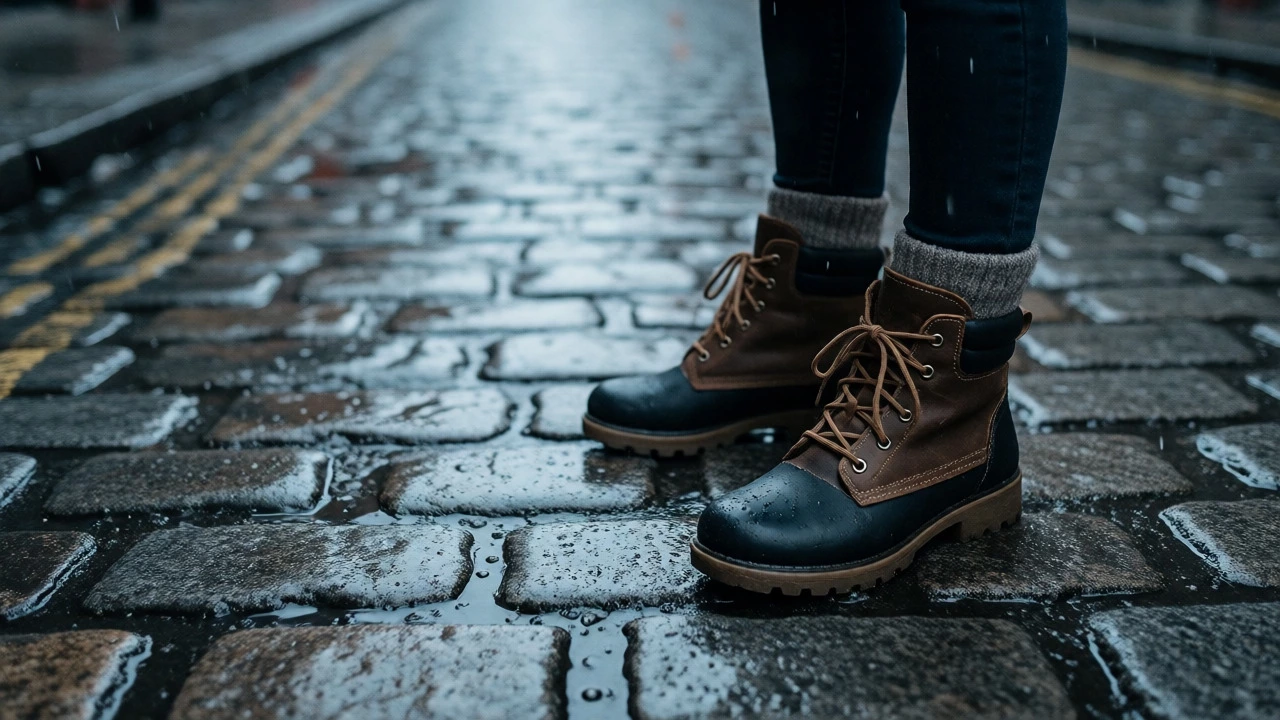
Consider the terrain. Walking on cobblestones in Dublin or uneven paths in Connemara requires stability. If your foot slides around inside a boot that’s too narrow, you lose balance and increase friction. This leads to hotspots and blisters. A properly fitted wide boot keeps your foot secure without crushing the metatarsals. This is especially true for waterproof boots, which often have less internal space due to lining layers.
Brands That Actually Get Wide Feet Right
Not every brand offers wide fits, and those that do vary in quality. Here are some names you’ll find in Irish stores or shipping to Ireland that consistently offer good width options:
- Clarks is a British footwear retailer known for its Unstructured technology and wide availability of D and EE widths. They have numerous outlets across Ireland, making it easy to try before you buy. Their leather boots tend to mold well to wider feet over time.
- New Balance offers exceptional width variety, including 2E and 4E options, primarily in athletic styles but increasingly in casual boots. While famous for sneakers, their lifestyle boots provide excellent arch support for wide feet.
- Rieker specializes in comfort footwear with anti-stress soles and generous toe boxes, widely available in Irish shoe shops. They are a go-to for older demographics or anyone prioritizing immediate comfort over sleek aesthetics.
- Geox provides breathable waterproof boots with dedicated wide-fit lines, suitable for the Irish climate. Their technology helps manage moisture, which is crucial when wearing boots for hours in rain.
Independent Irish makers are also worth exploring. Smaller workshops often use more flexible lasts (the molds shoes are built on) and can accommodate wider feet better than mass-produced Chinese-made imports. Check out local artisans in Galway or Cork who might offer bespoke adjustments.
Common Mistakes When Buying Wide-Fit Boots
One major error is buying a longer shoe instead of a wider one. If your foot is too wide, going up a full size might make it longer but still too narrow across the ball. You’ll end up with excess length, causing your foot to slide forward and hit the front of the boot. Instead, look specifically for width codes. If you can’t find your width, consider stretching the boots professionally. Many cobbler services in cities like Dublin and Limerick can stretch leather boots by half a width.
Another mistake is ignoring socks. Thick wool socks are great for Irish winters, but they reduce the internal volume of your boot. If you plan to wear thick socks, ensure your wide-fit boot accounts for that extra bulk. Try the boots on with the socks you intend to wear most often.
Caring for Wide-Fit Leather Boots
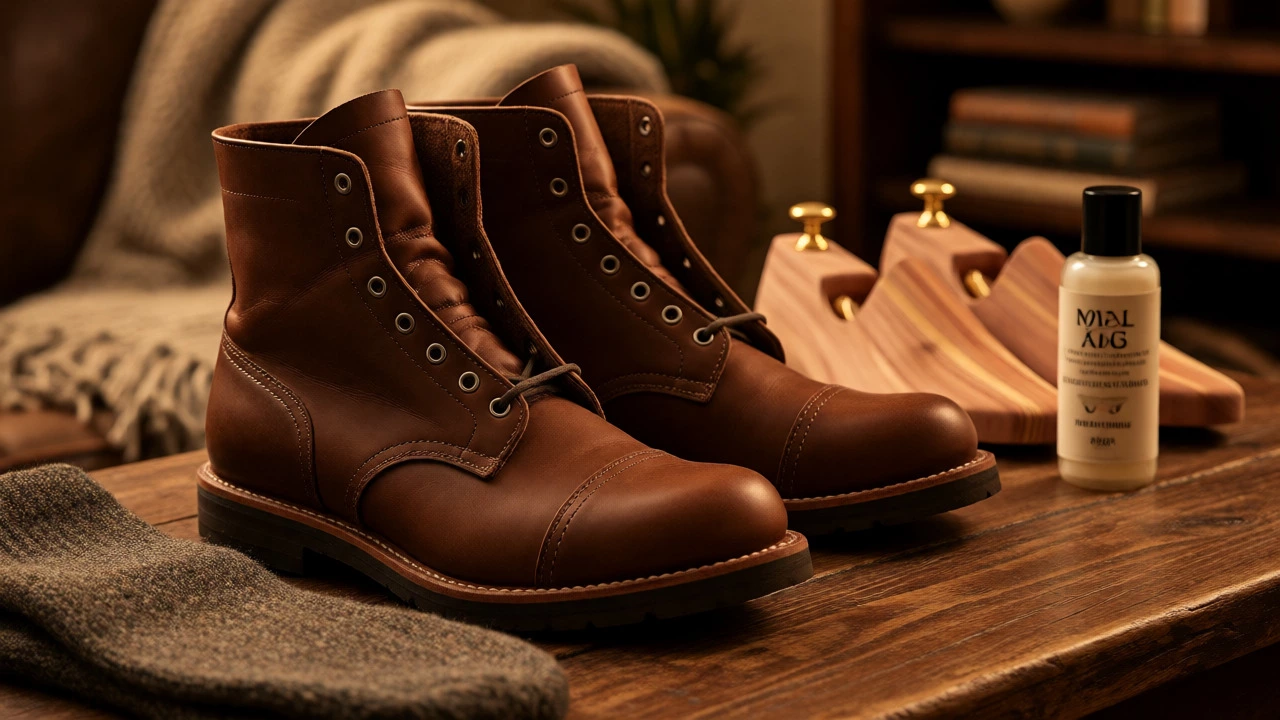
Leather is forgiving, but it needs maintenance. Wider boots have more surface area exposed to rain and mud. Clean them regularly with a damp cloth and apply a nourishing cream monthly. This keeps the leather supple, allowing it to flex with your foot rather than crack under pressure. Use shoe trees to maintain the shape. For wide feet, cedar shoe trees help prevent the sides from collapsing inward, preserving the width you paid for.
If you live in an area with heavy rainfall, like the west coast, waterproofing spray is essential. Apply it to seams and stitching, not just the surface. This prevents water ingress, which can cause leather to shrink and become even tighter-a nightmare for wide-footed women.
How do I know if my boots are too narrow?
If you experience tingling, numbness, or sharp pain on the sides of your toes after wearing boots for an hour, they are likely too narrow. Visible bulging of the foot material outside the sole edge is another clear sign. Remove the insole and stand on it; if your foot hangs over the edges significantly, you need a wider width.
Can I stretch narrow boots to fit wide feet?
Yes, but with limits. Leather boots can typically be stretched by a cobbler to gain about half a width. Synthetic materials stretch much less. Stretching sprays and home methods work for minor adjustments, but if your feet are significantly wider than the standard B-width, professional stretching or buying proper wide-fit boots is a better long-term solution.
Are wide-fit boots more expensive?
Not necessarily. Brands like Clarks and Rieker price their wide-fit models similarly to standard ones. However, specialized orthopedic or premium brands may charge more due to lower production volumes. Shopping during sales events in Ireland, such as the January sales or Black Friday, can help mitigate costs.
What is the difference between 'Wide' and 'Extra Wide'?
In UK/Ireland sizing, 'Wide' usually corresponds to a D-width, while 'Extra Wide' corresponds to E or EE widths. The difference is approximately 6-8mm in circumference around the ball of the foot. Extra-wide boots also often have higher instep volume, accommodating thicker ankles or high arches.
Where can I buy wide-fit boots in Ireland?
Major chains like Schuh, Clarks, and Office stock wide fits, but selection varies by store. Independent shoe shops in towns like Galway, Cork, and Dublin often carry specialized brands like Mephisto or Ara. Online retailers like Zalando and ASOS allow filtering by width, which is convenient for comparing options from home.