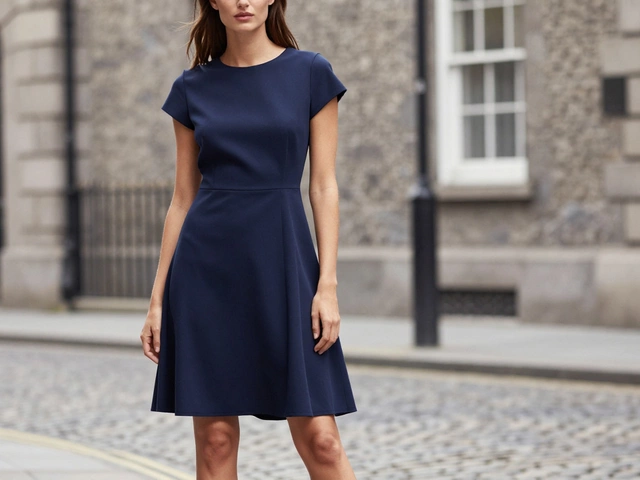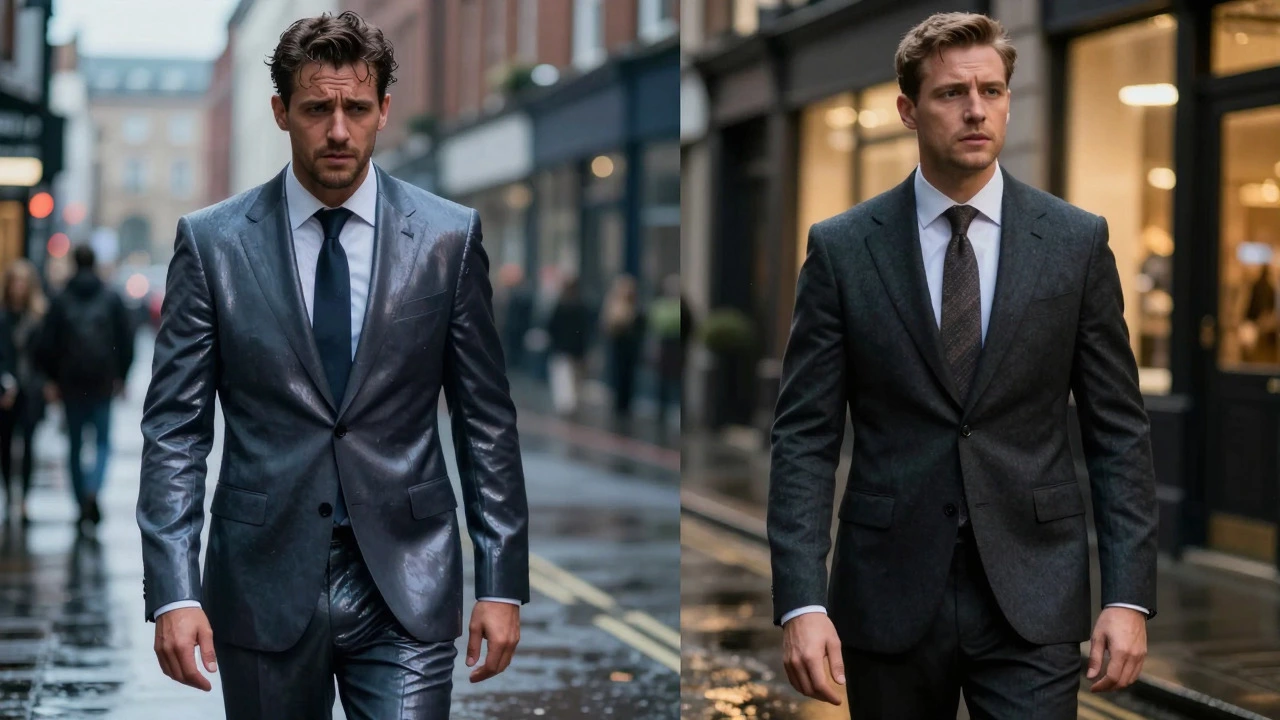
Suit Investment Calculator
$100 Budget Suit
Polyester blend, fused construction
Lifespan: 1 YearFinancial Breakdown
Walking down Grafton Street in Dublin or browsing the high street in Galway, you’ve likely noticed the stark contrast between the rack of off-the-peg suits at the budget retailer and the bespoke window displays further up the road. One costs around €90 (roughly $100), while the other might set you back €1,100 ($1,200). For many men in Ireland, this gap feels like a mystery wrapped in marketing hype. Is the expensive suit just paying for a logo, or is there something tangible underneath that price tag?
The truth is, the difference isn't just about brand prestige; it's about physics, chemistry, and human labor. When you buy a cheap suit, you are paying for efficiency. When you buy an expensive one, you are paying for longevity, comfort, and how the garment interacts with your body over time. Understanding these differences helps you decide whether to splurge for a wedding in the West of Ireland or stick to the budget for a casual office day.
Fabric: The Heart of the Suit
The most significant factor driving the price difference is the material itself. In the textile industry, quality is measured by 'super' numbers, which refer to the fineness of the wool fibers. A standard $100 suit typically uses coarse wool blends or even polyester. These fabrics are durable but lack breathability. Imagine wearing a polyester suit during a humid summer afternoon in Cork; you will sweat, and the fabric won't let your skin breathe. It holds heat and moisture, leading to discomfort and odors.
In contrast, a $1,000 suit usually features high-grade wool, such as Super 120s to Super 150s merino wool. This fiber is finer, softer, and naturally temperature-regulating. It wicks moisture away from your body, keeping you cool in the heat and warm in the chill. For those dealing with Ireland’s unpredictable weather-where rain can turn into wind within minutes-a natural fiber suit adapts better than synthetic alternatives. Additionally, expensive suits often use worsted wool, which has a smooth finish that drapes elegantly, whereas cheaper suits use flannel or rougher weaves that look matte and less refined.
Another aspect is the weight of the fabric. Cheap suits often use lightweight materials that pill easily after a few washes. High-end suits use heavier, denser weaves that resist wrinkling and maintain their shape throughout the day, even if you’re sitting through a long meeting in a conference room in Ballsbridge.
Construction: Fused vs. Canvas
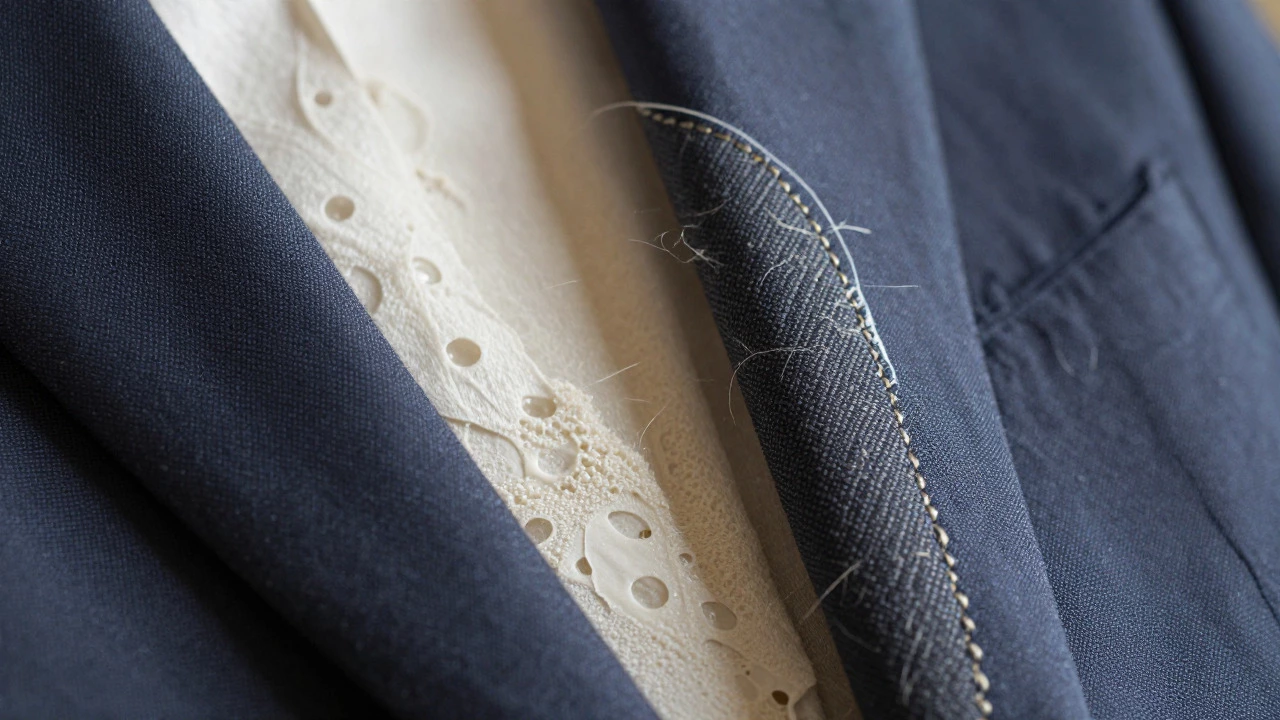
If fabric is the heart, construction is the skeleton. This is where the technical gap widens significantly. Most budget suits are 'fused.' Manufacturers apply a layer of adhesive foam to the inside of the jacket front to give it structure. It’s quick, cheap, and requires minimal labor. However, glue degrades over time. After a few dry cleanings, the glue can bubble or separate from the fabric, causing the lapels to curl or wrinkle awkwardly. You’ve probably seen this on older colleagues-the jacket looks distorted, almost like it’s melting.
Expensive suits use 'canvas construction,' specifically half-canvas or full-canvas. Instead of glue, layers of horsehair canvas are hand-stitched between the outer fabric and the lining. This allows the jacket to move with your body rather than against it. Over time, a canvas suit molds to your unique physique, creating a personalized fit that improves with age. If you plan to wear your suit regularly for five years or more, canvas construction is non-negotiable. It ensures the lapels roll naturally and the chest maintains its shape without artificial support.
Fit and Alterations: Off-the-Rack vs. Made-to-Measure
In Ireland, finding a perfect off-the-rack fit can be challenging due to varying body types. Budget suits are mass-produced in standard sizes (S, M, L) based on average proportions. They rarely account for shoulder width, sleeve length, or waist taper accurately. You might buy a size Medium, but the sleeves could be too short, or the trousers too baggy. While you can take them to a tailor in Temple Bar or Clifton Lanes, altering a fused suit is risky because cutting through the glued layers can cause delamination.
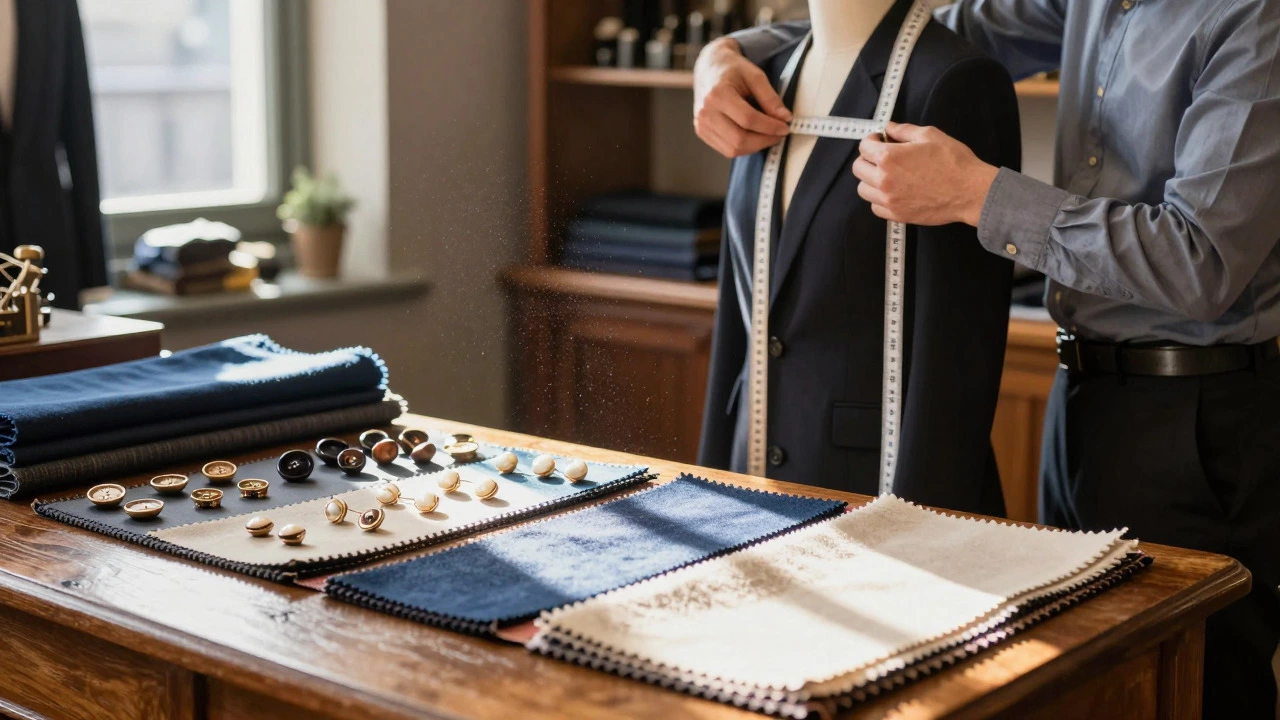
A $1,000 suit often comes from a made-to-measure service, available at boutiques in Dublin, Cork, or Galway. Here, a tailor takes precise measurements of your shoulders, chest, waist, and inseam. The pattern is adjusted to your specific dimensions. Even if it’s not fully bespoke (hand-cut from scratch), the adjustments ensure the shoulders sit correctly and the jacket breaks properly across your torso. This level of customization eliminates the need for extensive alterations later, saving money and frustration in the long run.
Details That Matter: Buttons, Linings, and Stitching
Look closely at the buttons. Cheap suits use plastic buttons that feel light and hollow. They can snap under tension or lose their sheen quickly. Expensive suits use horn, mother-of-pearl, or high-quality corozo nut buttons. These materials are durable and have a natural luster that complements the wool. Furthermore, the buttonholes on a high-end suit are often hand-stitched, allowing for slight flexibility, whereas machine-stitched holes on budget suits are rigid and prone to tearing.
The lining also tells a story. Budget suits use 100% polyester linings, which trap heat and can feel sticky against the skin. Premium suits use Bemberg (a cupro rayon) or silk linings. Bemberg is breathable, anti-static, and smooth, making it easier to slide your arms in and out of the jacket. This small detail enhances daily comfort, especially when you’re rushing to catch the Luas or walking briskly through the city center.
Stitching density is another indicator. Count the stitches per inch on the seams. Cheap suits have wide, loose stitches that unravel easily. High-end suits feature tight, uniform stitching that reinforces the garment’s integrity. Hand-finished details, like pick stitching on the lapels, add aesthetic value and signal craftsmanship that machines cannot replicate perfectly.
Longevity and Cost Per Wear
Let’s talk economics. A $100 suit might look decent for six months, but then it pills, fades, and loses its shape. If you replace it every year, you spend $100 annually. Over ten years, that’s $1,000-and you still don’t own a good suit. A $1,000 suit, however, can last ten to fifteen years with proper care. Dry cleaning sparingly, using a wooden hanger, and rotating outfits extends its life. The cost per wear drops significantly, making it a smarter financial decision for frequent wearers.
| Feature | $100 Suit (Budget) | $1,000 Suit (Premium) |
|---|---|---|
| Fabric | Polyester blend or coarse wool | Super 120s+ Merino Wool |
| Construction | Fused (glued) | Half or Full Canvas |
| Fit | Standard sizing, limited alteration | Made-to-measure or tailored fit |
| Lining | Polyester (non-breathable) | Bemberg or Silk (breathable) |
| Buttons | Plastic | Horn, Mother-of-Pearl, Corozo |
| Lifespan | 6-18 months | 10+ years |
When to Buy Which?
So, which should you choose? If you need a suit for a one-off event, like a graduation ceremony at Trinity College or a single interview, a budget option might suffice. Just inspect it carefully for flaws. However, if you work in a professional environment in Dublin’s financial district, attend weddings frequently, or simply want to look sharp for important meetings, investing in a higher-quality suit pays off. It boosts confidence, commands respect, and serves you well for years.
For those in Ireland, consider visiting local tailors who offer made-to-measure services. Shops in areas like Merrion Row or on Henry Street in Galway provide personalized attention that online retailers can’t match. Ask questions about fabric origin and construction methods. Don’t be afraid to touch the material and check the stitching. Your future self will thank you for choosing quality over convenience.
Is it worth spending $1,000 on a suit if I only wear it occasionally?
If you wear it less than once a month, a mid-range option ($300-$500) might be more practical. However, if the occasional events are high-stakes, like client pitches or weddings, the confidence boost from a premium suit can justify the cost. Consider renting for very rare occasions instead.
Can I alter a cheap suit to fit like an expensive one?
You can make minor adjustments, like hemming trousers or taking in the waist. But you can’t fix poor shoulder fit or change the fundamental drape of fused construction. A tailor can improve fit slightly, but they can’t transform low-quality fabric into high-end elegance.
Where can I find affordable yet quality suits in Ireland?
Look for sales at established retailers like Brown Thomas or department stores in Dublin and Cork. Also, explore local tailors who offer entry-level made-to-measure options. Sometimes, buying off-season yields significant discounts on high-quality wool suits.
How do I maintain a high-end suit to ensure it lasts?
Avoid frequent dry cleaning; air it out after wear and brush off dust. Use a wide wooden hanger to maintain the shoulder shape. Store it in a breathable garment bag, not plastic. Rotate your suits so they rest between wears, allowing the fibers to recover.
Does the brand name matter when buying a suit?
Brand names often correlate with quality, but not always. Focus on the specs: fabric content, construction method, and fit. Some lesser-known brands offer excellent value with high-quality wool and canvas construction without the luxury markup. Always prioritize substance over status symbols.