Suit Investment & Cost-Per-Wear Calculator
Configure Your Scenario
Select a suit tier and click "Analyze Value" to see the breakdown.
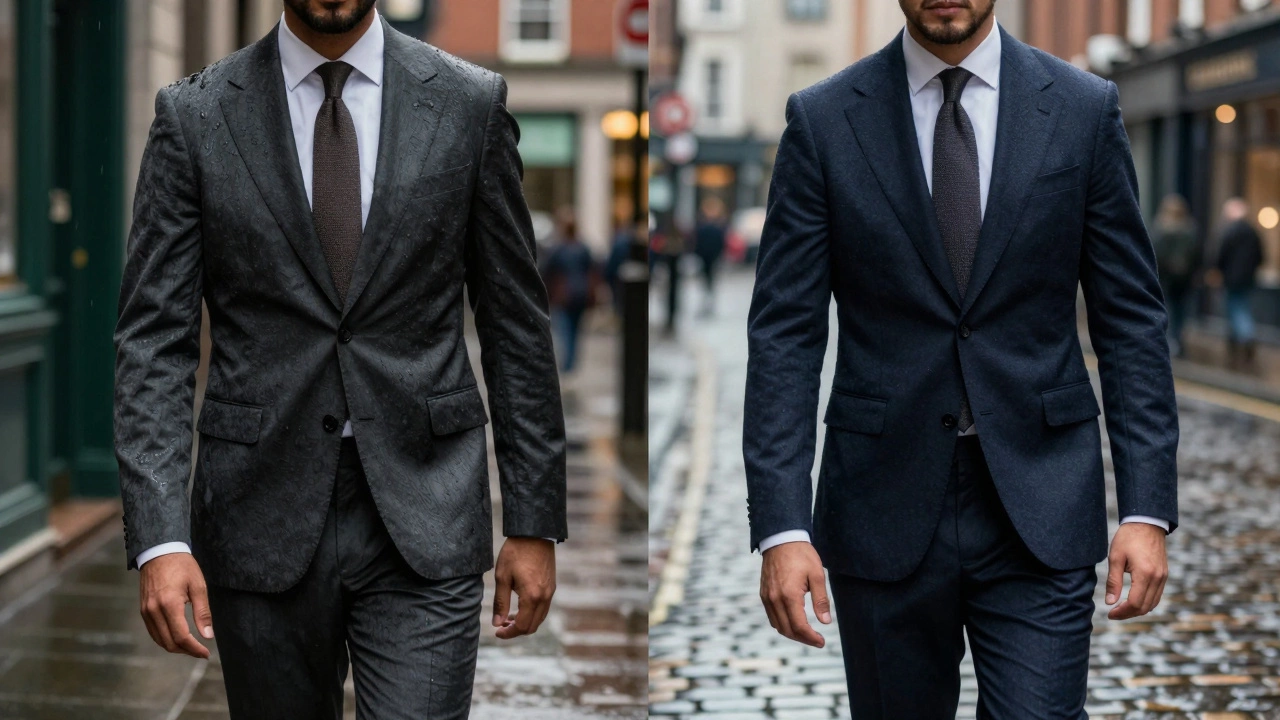
Walking down Grafton Street or heading into a boardroom in Dublin’s Docklands, you might spot two men in suits. One looks sharp but stiff; the other moves with a fluidity that seems almost natural. The price tag on their labels could be worlds apart-one at €450 (roughly $500) and the other nearing €5,000 ($5,000). In Ireland, where we value authenticity and substance over flash, understanding this gap isn't just about vanity. It is about knowing what you are paying for when you invest in your wardrobe.
The difference between a $500 suit and a $5000 suit is rarely about the logo stitched onto the pocket. It comes down to three pillars: the fabric's origin and weight, the construction method (how it holds its shape), and the labor hours poured into making it fit your specific body. Let’s break down exactly where your money goes in each tier, keeping an eye on how these choices play out in our local climate and culture.
The Fabric: Wool Origins and Weather Resistance
If you live in Galway or anywhere along the Atlantic coast, you know that "weather" is not a season here; it is a mood swing. A cheap suit often uses synthetic blends or lower-grade wool that pills after one dry clean. A high-end suit uses Super 120s to Super 150s worsted wool, sourced from mills in Scotland like Holland & Sherry or British brands like Dormeuil.
At the $500 level, you are likely looking at mass-produced fabrics that prioritize durability over breathability. They might feel slightly plastic-like against the skin. At the $5,000 mark, the fabric is lighter yet stronger. It breathes. When you step out of a heated pub in Temple Bar into a drizzly evening, a high-quality wool suit absorbs moisture without feeling clammy, whereas a cheaper blend traps heat and humidity.
- $500 Tier: Often contains polyester blends or lower-count wool (Super 80s-100s). Heavier, less breathable, prone to wrinkling.
- $5,000 Tier: High-count virgin wool (Super 120s+). Lightweight, breathable, resists wrinkles naturally, and ages gracefully.
Construction: Fused vs. Half-Canvas vs. Full Canvas
This is the technical heart of the matter. How does the jacket hold its shape? Does it drape over your shoulders, or does it sit on them?
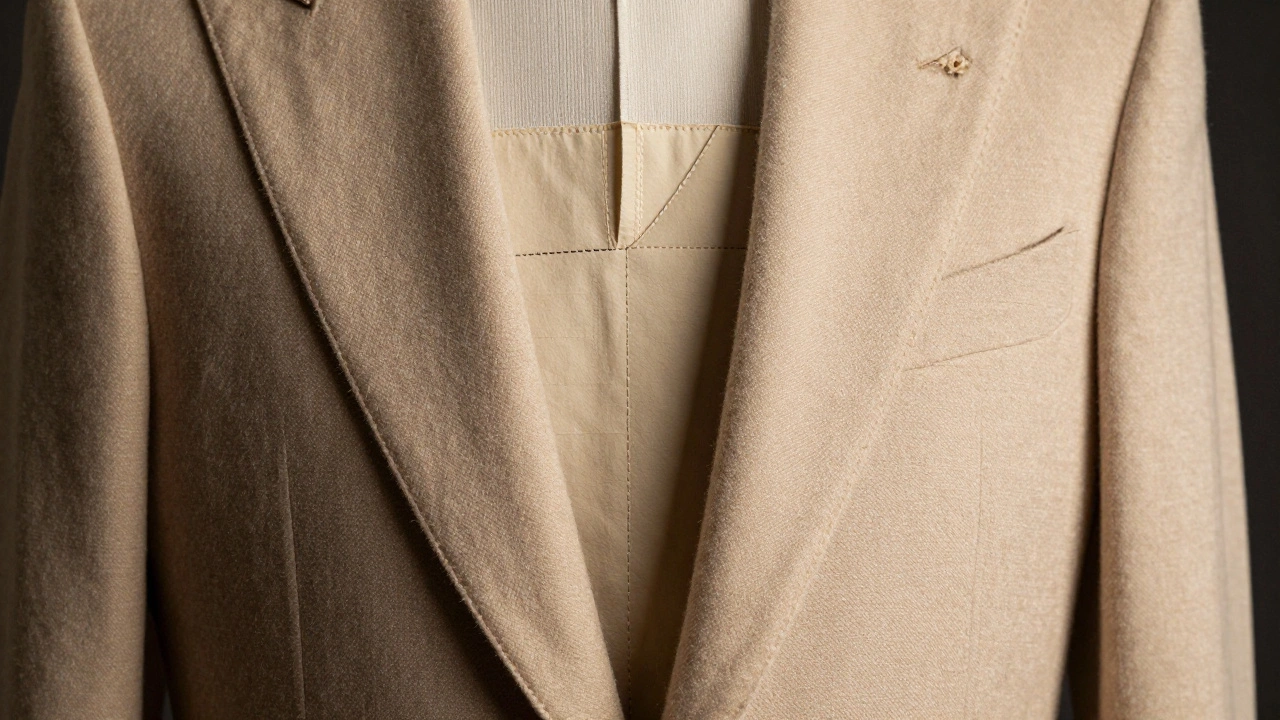
Cheap suits use fusing, which is a layer of adhesive glue applied to bond the outer fabric to the inner lining. Imagine ironing a piece of paper onto another. Over time, especially with the humidity changes common in Ireland, that glue bubbles. You get those unsightly ripples across the chest. This is why many off-the-rack suits look distorted after a few years.
A mid-range suit might use half-canvas, stitching a canvas interlining only to the front panels. But a true $5,000 suit typically features full canvas construction, which is a hand-stitched layer of horsehair canvas between the fabric and lining that allows the jacket to mold to your body over time. There is no glue. The tailor stitches layers together by hand. This allows the lapel to roll naturally rather than flip sharply. It gives the suit life. It moves with you. If you are attending a wedding in Kilkenny or a funeral in Cork, this structural integrity ensures you look polished from the first button to the last.
| Feature | $500 Suit (Off-the-Rack) | $5,000 Suit (Bespoke/Made-to-Measure) |
|---|---|---|
| Interlining | Fused (Glue) | Full Canvas (Hand-stitched horsehair) |
| Lapel Roll | Stiff, flipped | Natural, soft roll |
| Longevity | 3-5 years before distortion | 20+ years with proper care |
| Fit Adjustments | Minimal (hemming only) | Extensive (shoulders, chest, waist) |
The Fit: Off-the-Rack vs. Bespoke
In Ireland, we have a diverse range of body types. Standard sizing assumes a generic shape. A $500 suit is cut for a "average" man who may not exist. You buy it, and then you hope the alterations shop around O'Connell Street can fix the sleeves. But you cannot easily change the shoulder width or the chest circumference of a fused suit without risking damage.
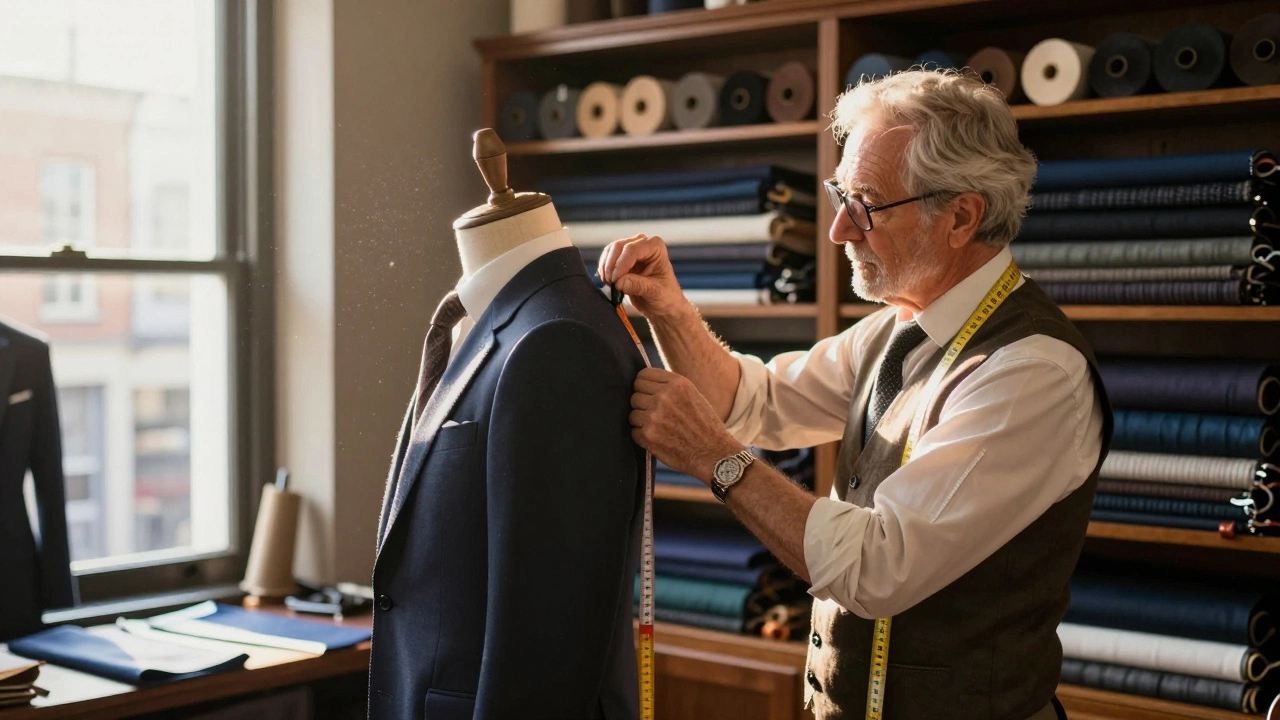
A $5,000 suit is usually bespoke or high-end made-to-measure. The tailor takes 25+ measurements. They note if you slouch, if you have a broader back, or if your arms are longer than your torso. They draft a unique pattern just for you. The result is a garment that feels like a second skin. When you raise your arm to grab a pint in a crowded session in Ennis, the jacket doesn’t pull tight across the back. It accommodates your movement because it was built for your geometry, not a factory template.
Where to Look in Ireland
If you are hunting for a $500 suit, you have plenty of options. Stores like Marks & Spencer, Dunnes Stores, or international chains like Zara offer decent entry-level options. For a slight step up, check out retailers in Dublin city center or larger towns like Limerick and Galway City that carry brands like Ted Baker or Reiss. These are fine for occasional wear-job interviews, once-a-year weddings, or corporate events where you won't be sweating under the lights.
For the $5,000 investment, you need to seek out traditional tailors. In Dublin, places like Dunnes Stores is a major Irish retail chain known for affordable clothing and home goods won't cut it. You want heritage houses. Think of names like Henry Poole is a historic Savile Row tailor established in 1806 (if you travel to London) or local masters like John Martin is a renowned Dublin-based tailor offering bespoke services or Gallagher's Tailors is a family-run business in Dublin specializing in custom menswear. In Cork, you might find excellent craftsmanship at independent ateliers. These tailors don't just sell clothes; they offer a service. You spend hours discussing details: the notch of the lapel, the number of buttons, the lining color. It is a relationship, not a transaction.
Is the ,000 Suit Worth It?
Let’s be realistic. If you work in tech in Silicon Valley, nobody cares. But in Ireland, particularly in professional sectors like law, finance, or politics, appearance still signals competence. A well-tailored suit commands respect. It suggests attention to detail.
However, cost per wear matters. If you wear a suit twice a year, a $5,000 suit costs you $2,500 annually. That is hard to justify. A $500 suit worn five times a year is more economical. But if you wear a suit weekly, the $5,000 suit pays for itself in five years compared to replacing three cheap suits. Plus, the comfort factor is undeniable. After a long day of meetings in Phoenix Park or traveling through the Wild Atlantic Way, coming home to a suit that didn't restrict your breathing is a luxury worth noting.
Maintenance Matters More Than Price
A $5,000 suit requires care. You cannot throw it in the wash. You need a reputable dry cleaner who understands delicate wools. In Ireland, avoid the quick-turnaround cleaners on high streets if possible. Seek out specialists who steam rather than chemically soak excessively. Hang your suit on a wide wooden hanger, not a wire coat hanger that distorts the shoulders. Let it rest for 24 hours between wears to allow the fibers to recover. This extends the life of any suit, regardless of price.
Can I get a good fit with a $500 suit?
Yes, but with limits. A skilled alterationist can adjust sleeve length, trouser hem, and sometimes take in the waist. However, they cannot fix the shoulders or the chest structure. If the shoulders fit well off the rack, you can make a $500 suit look sharp. If the shoulders are too wide or narrow, no amount of sewing will save it.
What is the best fabric for Irish weather?
Wool is king. Specifically, a medium-weight worsted wool (around 230-280 grams) works well for most of the year. Avoid linen or lightweight cotton suits for winter months as they offer little insulation against the damp chill. Tweed is also an excellent option for autumn and winter, providing warmth and texture, though it is less formal.
How long does a bespoke suit take in Ireland?
Typically 6 to 12 weeks. This includes initial measurements, a basted fitting (where the suit is loosely stitched together for adjustments), and final fittings. Rush orders are possible but often come with a premium fee and may compromise on quality checks.
Are there any Irish brands that make high-end suits?
While Ireland is famous for knitwear and denim, bespoke tailoring is often provided by individual master tailors rather than large branded houses. However, some Dublin and Cork-based tailors source fabrics from top Italian and British mills and construct garments locally, offering a hybrid of global quality and local craftsmanship.
Should I buy a suit online?
For a $500 suit, yes, if you know your measurements well. Many online retailers offer generous return policies. For a $5,000 suit, absolutely not. The nuance of fit, fabric drape, and personal consultation cannot be replicated online. The value of a high-end suit lies in the human interaction and precise customization.
For a $500 suit, yes, if you know your measurements well. Many online retailers offer generous return policies. For a $5,000 suit, absolutely not. The nuance of fit, fabric drape, and personal consultation cannot be replicated online. The value of a high-end suit lies in the human interaction and precise customization.