
Royal Childcare Cost & Support Estimator
Your Family Profile
Enter your details and click Calculate to see your estimated annual childcare investment.
It is a question that pops up in chat groups from Dublin to Cork more often than you might think. When the Royal Family appears on screen, we aren't just watching people; we are analyzing a lifestyle. Specifically, we are trying to figure out the logistics behind raising three young children while maintaining global duties. The title asks how many nannies do William and Kate have, but the real answer is less about a specific number and more about the evolving model of modern parenting that resonates with parents here in Ireland.
The short answer? There isn't one fixed number. It fluctuates based on location, workload, and the age of Prince George, Princess Charlotte, and Prince Louis. But if you look at the pattern, it usually involves a core team of two or three dedicated staff members, supplemented by temporary help during high-profile events. For Irish families juggling work and childcare, this distinction between "permanent" and "event-based" support is actually quite relevant. We don't all need a full-time live-in nanny, but knowing when to bring in extra hands can save your sanity.
The Core Team: Who Actually Cares for the Kids?
Let's break down the actual personnel. The most famous name associated with the royal children is Maria Teresa Turrion Borrallo. She was hired in 2014 and has been a constant presence. Unlike the stereotypical stern governess, reports suggest she acts more as a "children's secretary"-managing schedules, homework, and emotional needs. This role is distinct from a traditional babysitter. In Ireland, where the National Childcare Scheme (NCS) is helping subsidize early years education, we see a similar shift. Parents aren't just looking for someone to watch the kids; they want developmental partners.
Then there is the second layer of support. During their time at Anmer Hall in Norfolk, the couple relied heavily on local help. This mirrors what many expat families in Dublin or Galway do: hire local, trusted individuals who understand the community context. For William and Kate, this meant balancing private staff with public expectations. They famously banned iPads and smartphones for the children until secondary school age. If you try that in a busy creche in Limerick, you'll know it takes serious village support to enforce digital boundaries.
| Feature | William & Kate | Typical Irish Household |
|---|---|---|
| Primary Caregiver | Maria Teresa Turrion Borrallo (Full-time) | Parent(s) + Creche/Micro-school |
| Secondary Support | Second nanny or housekeeper (part-time) | Grandparents or Childminder |
| Event Staff | Hired specifically for tours/events | Sitters or relatives for weddings/parties |
| Digital Policy | No phones until 11+ (approx.) | Varies, often stricter than UK averages |
| Clothing Budget | High-end brands, custom fits | Value-focused, sales-driven (e.g., Penneys, Next) |
Why the Number Changes: The Event Factor
Here is where the "how many" question gets tricky. You cannot raise three kids alone while attending state banquets. So, the count increases temporarily. When the family travels to places like New York or Paris, they bring additional staff. This isn't extravagance; it's risk management. A sick child can derail a diplomatic mission. For an Irish parent, the parallel might be hiring a sitter for a wedding or a corporate gala. You wouldn't take a toddler to a black-tie event without backup, right?
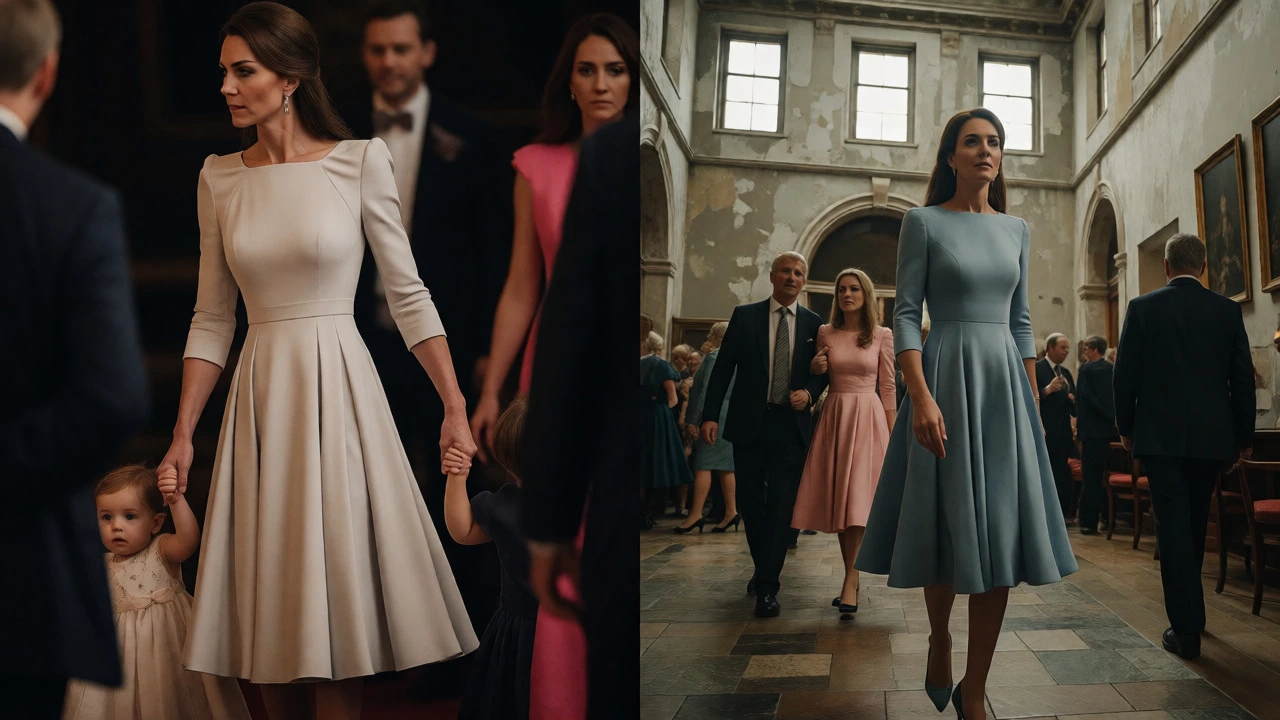
This brings us to the fashion angle, which is surprisingly linked to childcare logistics. Think about evening dresses. Kate wears them to maintain protocol, but those gowns require planning. You can't run around chasing a toddler in a structured silk gown. Therefore, the nanny's job includes managing the environment so the mother can function in formal wear. In Ireland, we see this dynamic at charity galas in Dublin or weddings in Kildare. The woman in the elegant dress often relies on a network-whether it's a partner, a grandparent, or a paid helper-to ensure the children are fed, changed, and calm before she steps into the spotlight.
Cost Implications for Irish Readers
What does this mean for your wallet? Royal nannies reportedly earn between £30,000 and £50,000 annually, plus accommodation and benefits. Compare that to the Irish market. According to recent data from the Economic and Social Research Institute (ESRI), average childcare costs in Ireland remain among the highest in Europe, though subsidies are changing the landscape. A full-time live-in nanny in Dublin might cost €25,000 to €35,000 per year, excluding rent. That's steep.
Most Irish families opt for a hybrid model. They use registered childminders or micro-crèches, which offer flexibility. The lesson from the royals isn't "hire three nannies." It's "build a reliable support system." Whether that's swapping childcare duties with a neighbor in Cork or using grandparents in Kerry, the goal is consistent care. Consistency matters more than quantity. Children thrive on routine, not just supervision.

Fashion and Function: Dressing for the Role
Since we are discussing evening dresses and parenting, let's talk practicality. Kate's style is often emulated by Irish women attending formal occasions. But notice her choices: knee-length hemlines, sturdy heels (or flats), and fabrics that resist wrinkling. Why? Because she is ready to move. If you are dressing for an event in Ireland, consider the venue. Is it a drafty castle in Tipperary? A sleek hotel in Dublin? Your outfit should allow you to engage with your children if needed, even if a nanny is nearby.
Local brands like Oxfam boutiques in Dublin or sustainable labels in Galway offer options that balance elegance with comfort. The key takeaway from observing the royal wardrobe is functionality. A beautiful dress shouldn't trap you. Similarly, your childcare choice shouldn't trap you in financial stress. Choose solutions that fit your life, not just your budget.
Building Your Own "Royal" Support System
You don't need a palace to create a stable environment for your kids. Here is how to apply royal-level organization to your Irish household:
- Define Roles Clearly: Just as Maria handles education and another might handle meals, assign specific tasks to your support network. Don't assume everyone knows what to do.
- Plan for Peak Times: Identify your busiest weeks-maybe Christmas preparations or exam seasons. Book extra help in advance. In Ireland, booking sitters during Bank Holiday weekends can be tough, so plan ahead.
- Respect Privacy: The royals keep their children out of the tabloids. Protect your kids' digital footprint too. Ask your caregivers to avoid posting photos online.
- Invest in Quality Over Quantity: One trustworthy, experienced caregiver is better than three unreliable ones. Check references thoroughly through platforms like MindMeister or local Facebook groups.
The narrative around William and Kate's nannies is really about balance. It's about acknowledging that parenting is hard, and asking for help is smart. Whether you are in a terraced house in Belfast or a farm in Meath, the principles hold true. You need structure, trust, and yes, sometimes a bit of extra help so you can shine in that evening dress without worrying if the kids are okay.
Do William and Kate have live-in nannies?
Yes, primarily. Maria Teresa Turrion Borrallo is known to be a live-in nanny. However, they also employ other staff who may commute or stay temporarily depending on the family's location, such as when they reside at Kensington Palace versus Anmer Hall.
How much does a royal nanny cost compared to Ireland?
Royal nannies can earn upwards of £40,000 ($50,000+) annually with perks. In Ireland, a comparable full-time professional nanny might cost between €25,000 and €35,000, though costs vary significantly by region, with Dublin being more expensive than rural areas like Mayo or Donegal.
Why is the number of nannies important for parenting trends?
It highlights the trend toward specialized childcare roles. Instead of a general babysitter, parents increasingly seek caregivers with educational backgrounds or specific skill sets, mirroring the royal approach of having a 'children's secretary' rather than just a watcher.
Does Kate Middleton dress differently because of the nannies?
Indirectly, yes. Her clothing choices prioritize mobility and durability, allowing her to interact physically with her children even when nannies are present. This influences fashion trends, including the popularity of practical yet stylish evening dresses that don't restrict movement.
Can I afford royal-style childcare in Ireland?
For most, no. However, you can adopt the philosophy. Use the National Childcare Scheme to reduce costs, hire part-time help for specific tasks, and rely on community networks. The goal is reliability, not necessarily full-time exclusive staffing.