Hoodie Storage Advisor
Not sure whether to fold or hang? Answer these questions to get a personalized recommendation tailored to your specific hoodie and living situation.
It’s a question that pops up more often than you’d think, especially when the damp chill of an Ireland autumn starts creeping into your flat. You’ve just bought a fresh hoodie-maybe it’s a heavyweight piece from a local Galway maker or a classic brand you picked up in Dublin-and now you’re staring at your wardrobe, wondering: do I hang this thing up, or do I fold it?
The answer isn’t just about tidiness; it’s about preserving the life of your favorite garment. If you’ve ever pulled a hoodie out of the closet only to find strange shoulder bumps where the hanger dug in, or noticed the neckline stretching out like old elastic, you know exactly what we mean. Here is how to keep your hoodies looking sharp, whether you’re dealing with the humidity in Cork or the dry heat of a radiator in Belfast.
Why Hanging Hoodies Is Usually a Mistake
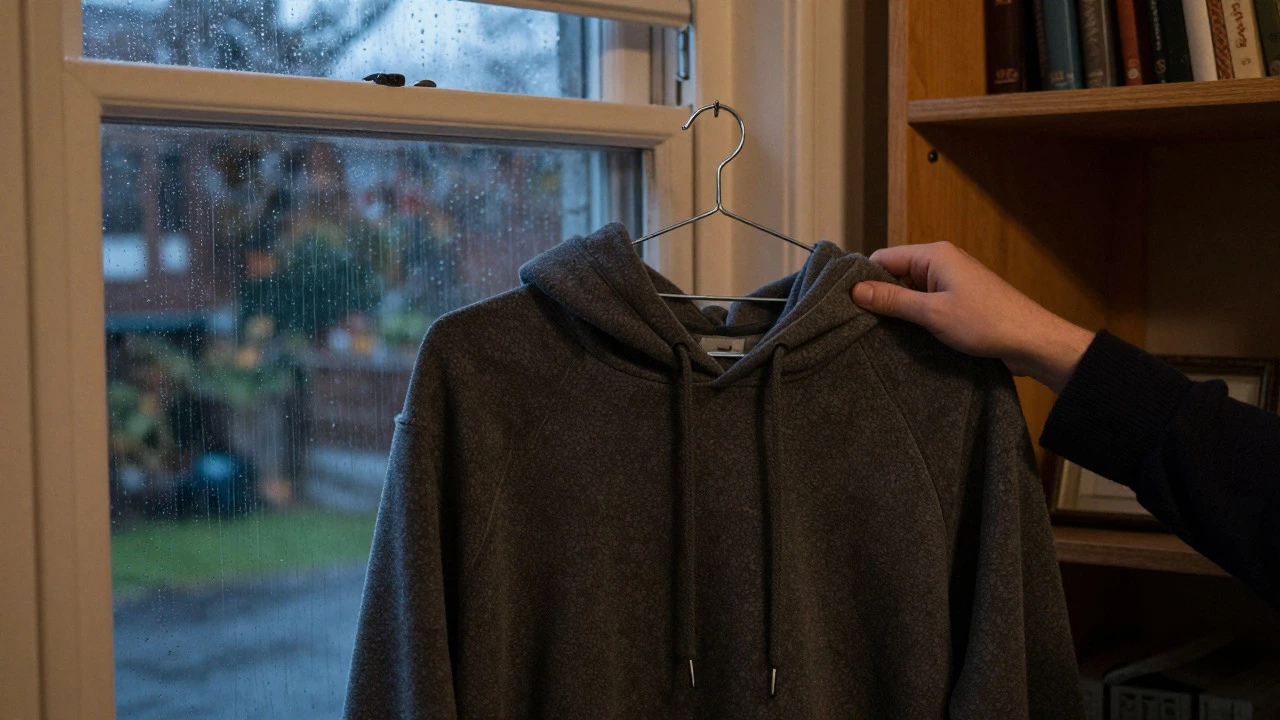
Let’s be clear: hanging a hoodie on a standard plastic or wire hanger is almost always bad news. Unlike a crisp button-down shirt or a structured blazer, hoodies are made from knit fabrics-usually cotton fleece, French terry, or heavy jersey. These materials have weight. Gravity does its job over time, and if you leave a hoodie hanging, two things happen.
First, the shoulders stretch. You’ll see those little triangular bumps form right where the hanger ends meet the fabric. It looks sloppy and can permanently distort the shape. Second, the neckline widens. The weight of the body pulls down on the neckband, causing it to sag. Once that ribbed collar loses its snap, it rarely bounces back. This is particularly true for the heavier '380gsm' style hoodies that are popular here because they handle our unpredictable weather well but are too heavy for flimsy hangers.
The Art of Folding Your Hoodie Correctly
If hanging is out, folding is in. But not just any fold will do. You want a method that keeps the garment compact, prevents deep creases, and makes it easy to grab without disturbing the whole stack. The "KonMari" style fold is great for drawers, but for shelves-which many of us in apartments in Dublin or Cork rely on due to limited space-a simpler, rectangular fold works best.
- Lay it flat: Start on a clean surface. Smooth out any wrinkles immediately. If you fold it while wrinkled, that crease becomes permanent.
- Fold the sleeves: Bring one sleeve across the chest, then the other. They should lie parallel to the body, not sticking out at odd angles.
- Clean the sides: Fold the left side inward toward the center line, then the right side. You’re aiming for a neat rectangle roughly the width of a hardcover book.
- Bottom up: Fold the bottom hem up towards the neck. Depending on the length, you might need one or two folds. The goal is a square or slightly rectangular bundle.
- Tuck the hood (optional): Some people prefer to tuck the hood inside the final fold to keep the profile low. Others leave it out so you can see the color instantly. In tight wardrobes, tucking it saves inches.
This method ensures that when you pull one hoodie out, the others don’t collapse into a messy pile. It’s practical advice that saves you time when you’re rushing out the door for work or heading to a pub session.
When Hanging Might Actually Work
Is there ever a time to hang a hoodie? Yes, but with caveats. If you have a very lightweight summer hoodie-think thin cotton jersey that weighs next to nothing-it won’t stretch as much. Also, if you’re using padded wooden hangers, the stress on the shoulders is distributed better.
However, even then, consider the context. In Ireland, space is often at a premium. Many older houses in cities like Limerick or Waterford have narrow built-in wardrobes. Hanging bulky hoodies eats up horizontal rail space quickly. Folding allows you to double-stack or triple-stack, effectively doubling your storage capacity. Unless you’re displaying a limited-edition piece as part of your room decor, functionality usually beats aesthetics here.

Dealing With Humidity and Dampness
You can’t talk about clothing care in Ireland without talking about damp. Our climate is mild but wet, and indoor humidity can cause issues if you aren’t careful. Mold and musty smells are the enemies of folded clothes stored in dark corners.
If you store hoodies in a cupboard, ensure there’s airflow. Don’t pack them so tightly that air can’t circulate. In coastal towns like Salthill or Bundoran, salt air and moisture can accelerate wear. Consider adding cedar blocks or lavender sachets to your drawer or shelf. Not only do they smell nice, but they also deter moths, which love natural fibers like wool-blend hoodies.
Also, never put away a hoodie that feels even slightly damp. The risk of mildew developing in the thick fleece lining is real. Let it air dry completely before folding. If you live in a ground-floor apartment prone to damp, check your stacks once a month during winter. You might be surprised by a faint musty scent if ventilation was poor.
Storage Solutions for Different Spaces
Your storage method should match your living situation. Here is a breakdown based on common Irish housing types.
| Living Situation | Best Method | Pro Tip |
|---|---|---|
| Small Apartment (Dublin/Cork) | Folding on Shelves | Use vertical filing boxes to separate colors. |
| Family Home (Suburbs) | Drawer Dividers | Prevents digging through piles; keeps socks separated. |
| Student Housing | Under-bed Bins | Use vacuum bags for off-season heavyweights. |
| Rural House | Cedar Chests | Natural moth repellent handles local insect pests. |
In student accommodations, such as those near Trinity College Dublin or University College Cork, space is non-existent. Vacuum-seal bags are a lifesaver for bulky winter hoodies you won’t wear until October. Just remember to let them breathe for a day after unpacking to remove compression marks.

Care Tips to Extend Hoodie Life
Folding helps, but washing habits matter just as much. To keep your hoodies soft and vibrant, wash them inside out. This protects the outer dye from friction against other clothes. Use cold water-our mains water is generally soft, so hot water isn’t needed for cleaning and just shrinks the cotton.
Air drying is superior to tumble drying. Tumble dryers break down elastane in the cuffs and waistbands, leading to that baggy, tired look after just a few months. Hang them on a rack indoors or outside if the weather permits. If you must use a dryer, use the lowest heat setting and remove them while still slightly damp to finish air-drying. This reduces static and preserves the fabric integrity.
For pilling-those annoying little balls of fuzz on the sleeves-use a battery-operated fabric shaver. It’s a cheap tool available in most Dunnes Stores or Tesco outlets and makes an old hoodie look new again in minutes.
Common Myths About Hoodie Care
There’s a myth that you should never wash a hoodie with denim. While indigo dye can transfer, modern dyes are quite stable. Still, it’s safer to wash whites separately. Another myth is that folding causes worse creases than hanging. In reality, hanging causes distortion, which is far harder to fix than a temporary fold line. A quick steam or a shower-hang trick fixes fold lines easily.
Some argue that hoodies should be treated like sweaters and folded strictly. Others say they’re casual enough to crumple. The truth lies in the middle: treat them with respect, and they’ll last years. Given the cost of quality apparel in Ireland, extending the lifespan of a €50-€80 hoodie is a smart financial move.
Final Thoughts on Keeping Your Wardrobe Tidy
So, should you fold hoodies? Absolutely. It protects the shape, saves space, and keeps your wardrobe organized. Whether you’re navigating the narrow streets of Galway or managing a small flat in Dublin, efficient clothing storage makes daily life easier. Take ten minutes this weekend to refold your stack. Your future self, trying to get dressed in a hurry, will thank you.
Does folding hoodies cause permanent creases?
No, not if done correctly. Knit fabrics are flexible. Temporary fold lines disappear quickly when worn or steamed. Permanent damage comes from stretching via hanging, not folding.
How many hoodies should I own for an Irish climate?
A capsule wardrobe of 3-5 hoodies covers most needs: one lightweight for spring/summer, two mid-weight for autumn, and one or two heavy fleece-lined ones for winter. Adjust based on your commute and outdoor activity levels.
Can I hang hoodies on velvet hangers?
Velvet hangers are better than wire ones because they grip the fabric, reducing sliding. However, the weight of the hoodie still pulls down on the shoulders. For long-term storage, folding remains the superior choice to prevent neck and shoulder deformation.
What is the best way to remove musty smells from stored hoodies?
Wash them with a cup of white vinegar added to the rinse cycle. Vinegar neutralizes odors without leaving a scent. Alternatively, place them in a sealed bag with baking soda for 24 hours, then shake it out and air them outside.
Do I need to fold hoodies differently if they have zippers?
Zip-up hoodies can be folded similarly, but ensure the zipper is fully closed to prevent snagging on other clothes. If the zipper is delicate, fold the garment so the zipper runs along the edge of the fold, not across the middle, to reduce stress on the teeth.