Irish Safety Footwear Compliance Checker
Select your work conditions below to find out which European safety standard (EN ISO 20345) you need. Remember: In Ireland, we follow EU standards, not US OSHA regulations, though many boots meet both.
S3
Safety Shoe Level 3
You’ve probably heard the term thrown around in break rooms from Dublin to Cork, or seen it stamped on a box at your local hardware store. But if you’re standing there holding a pair of heavy-duty boots, wondering if they actually meet the legal standards for your job, you’re not alone. Many workers in Ireland get confused by the acronym OSHA. It’s an American standard, yet we use it as shorthand here all the time. So, what are OSHA shoes, and do you actually need them?
The short answer is: OSHA shoes are safety footwear designed to protect your feet from workplace hazards like falling objects, punctures, and electrical shocks. In the US, the Occupational Safety and Health Administration sets these rules. Here in Ireland, we don’t have an "OSHA" agency. We have the Health and Safety Authority (HSA) and European standards. But when people say "OSHA shoes," they usually mean boots that meet rigorous safety criteria-specifically those compliant with EN ISO 20345, the European standard for safety footwear. If you’re working on a construction site in Galway or handling chemicals in a lab in Limerick, getting this right isn’t just about comfort; it’s about keeping your toes intact and staying compliant with Irish law.
The Transatlantic Mix-Up: Why We Talk About OSHA in Ireland
It’s funny how language travels. OSHA stands for the Occupational Safety and Health Administration, a US government body established in 1970. They set strict rules for American workplaces. Ireland, being part of the EU, follows different regulations. Our primary guide for foot protection is the Safety, Health and Welfare at Work (General Application) Regulations 2007, which aligns with EU directives.
So why does everyone still ask for OSHA shoes? Because the brand recognition is massive. Many global manufacturers make boots that satisfy both US OSHA requirements and EU EN standards. When a site manager in Belfast says, "Get me some OSHA boots," he doesn’t necessarily mean you need to import American stock. He means you need boots that offer serious protection-steel toes, slip resistance, and durability. It’s a colloquialism, but understanding the difference matters because buying a boot labeled only "OSHA approved" might miss specific EU certifications required for insurance claims in Ireland.
Decoding the Labels: What EN ISO 20345 Actually Means
If you want to be safe, ignore the marketing fluff and look for the code stamped on the tongue or side of the shoe. The gold standard for safety footwear in Europe is EN ISO 20345. This standard defines what makes a shoe a "safety shoe." It’s not just about having a hard toe cap; it’s about how much impact the shoe can take before failing.
Here is how the basic protection levels break down. You’ll see codes like SB, S1, S2, and S3. Think of these as tiers of defense:
- SB (Safety Basic): These have a toe cap capable of resisting an impact of 200 joules (imagine dropping a 20kg weight from one meter). That’s the bare minimum.
- S1: Adds anti-static properties and energy absorption in the heel. Good for dry indoor environments like warehouses.
- S2: Takes S1 and adds water resistance. The upper material won’t soak through quickly. Useful for light outdoor work.
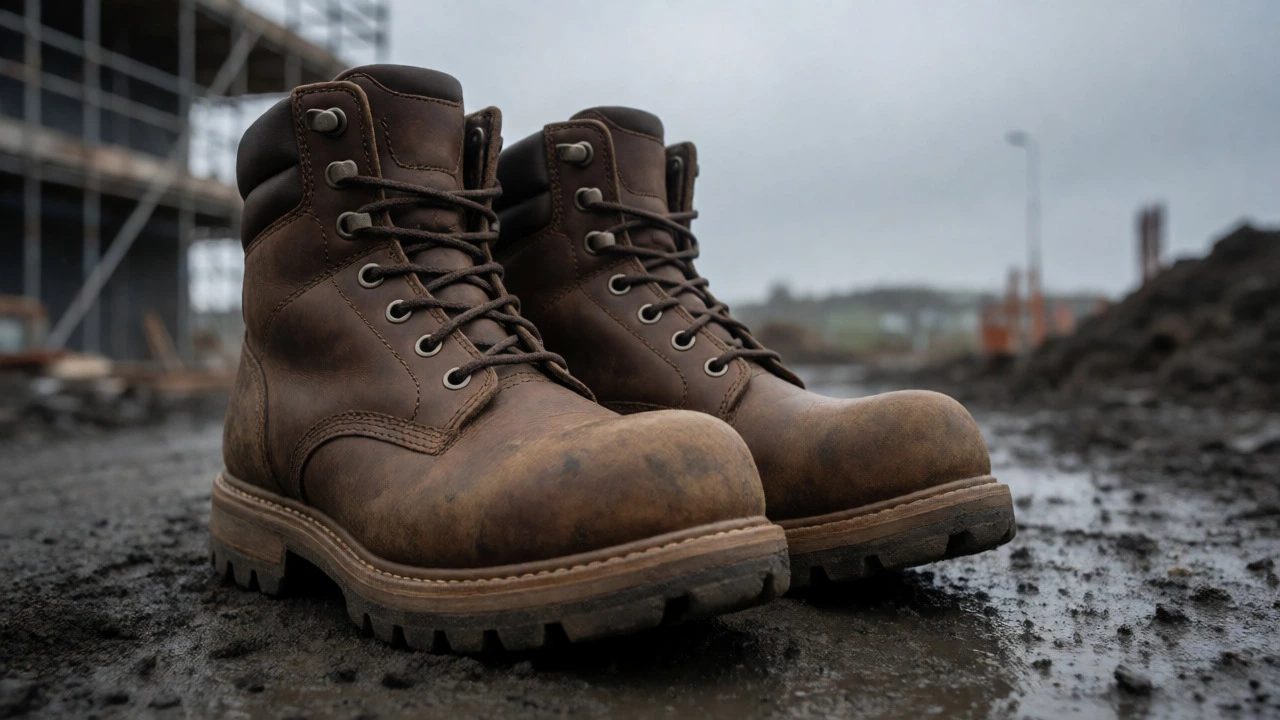
- S3: The heavy hitter. Includes everything in S2 plus a midsole penetration resistance (anti-puncture) and cleated outsoles. This is the go-to for construction sites across Ireland where nails and wet ground are constant threats.
When you’re shopping online from Irish retailers like ShoeZone or specialized safety suppliers, check for these codes. If the boot doesn’t have an EN ISO 20345 mark, it’s likely just a fashion sneaker with a steel toe, not a certified safety product.
| Code | Key Features | Best For |
|---|---|---|
| SB | Toe cap (200J), closed seat area | Light assembly, low-risk workshops |
| S1 | SB + Anti-static, Energy Absorption | Dry indoor factories, logistics |
| S2 | S1 + Water Resistant Upper | Food processing, light outdoor tasks |
| S3 | S2 + Anti-Puncture, Cleated Sole | Construction, agriculture, utilities |
| S4/S5 | Full rubber/PVC waterproofing | Fishing, heavy rain, chemical splash |
Hazards in the Irish Workplace: Matching Boots to Jobs
Ireland’s climate and industry mix dictate what kind of protection you really need. You wouldn’t wear the same boots digging peat in Connemara as you would wiring servers in a data center in Dublin.
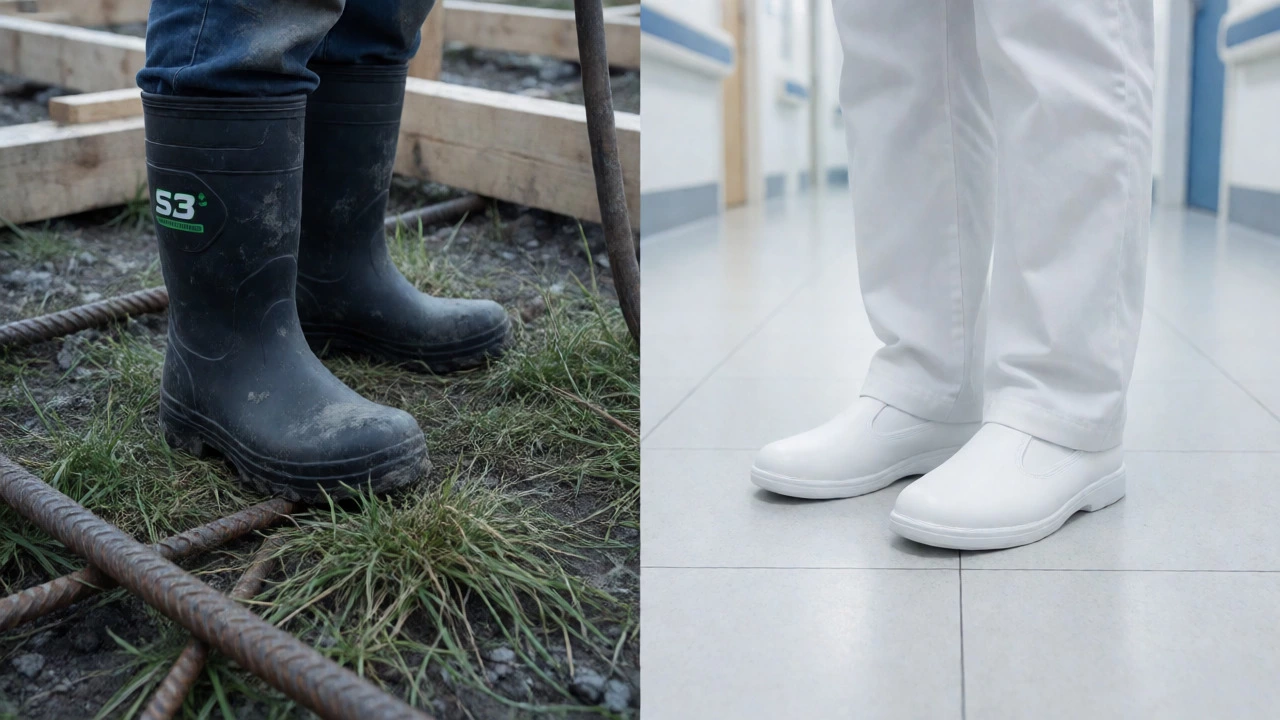
For construction workers, the risk profile is high. Falling bricks, sharp rebar, and uneven terrain are daily realities. Here, S3 rated boots are non-negotiable. The anti-puncture sole protects against nails driven into timber frames-a common sight on new housing estates in places like Meath or Kildare. Plus, the cleated sole helps you grip muddy grass, which is inevitable given our rainfall.
In contrast, consider healthcare workers in hospitals like Mater Misericordiae University Hospital in Dublin. They rarely face falling objects. Their main enemies are spills, fatigue, and infection control. For them, "OSHA-style" protection translates to S1 or SRC-rated slip-resistant shoes that are easy to clean. Steel toes might even be overkill and uncomfortable for 12-hour shifts. Always assess the specific hazard first.
Agriculture presents another unique challenge. Farmers dealing with livestock and machinery need protection from crushing injuries (hooves, tractor wheels) and chemical exposure from fertilizers. Waterproof leather boots with composite toes (which don’t conduct cold or metal detectors) are often preferred over steel, especially when walking through wet fields in Kerry or Tipperary.
Steel Toe vs. Composite Toe: Which One Wins?
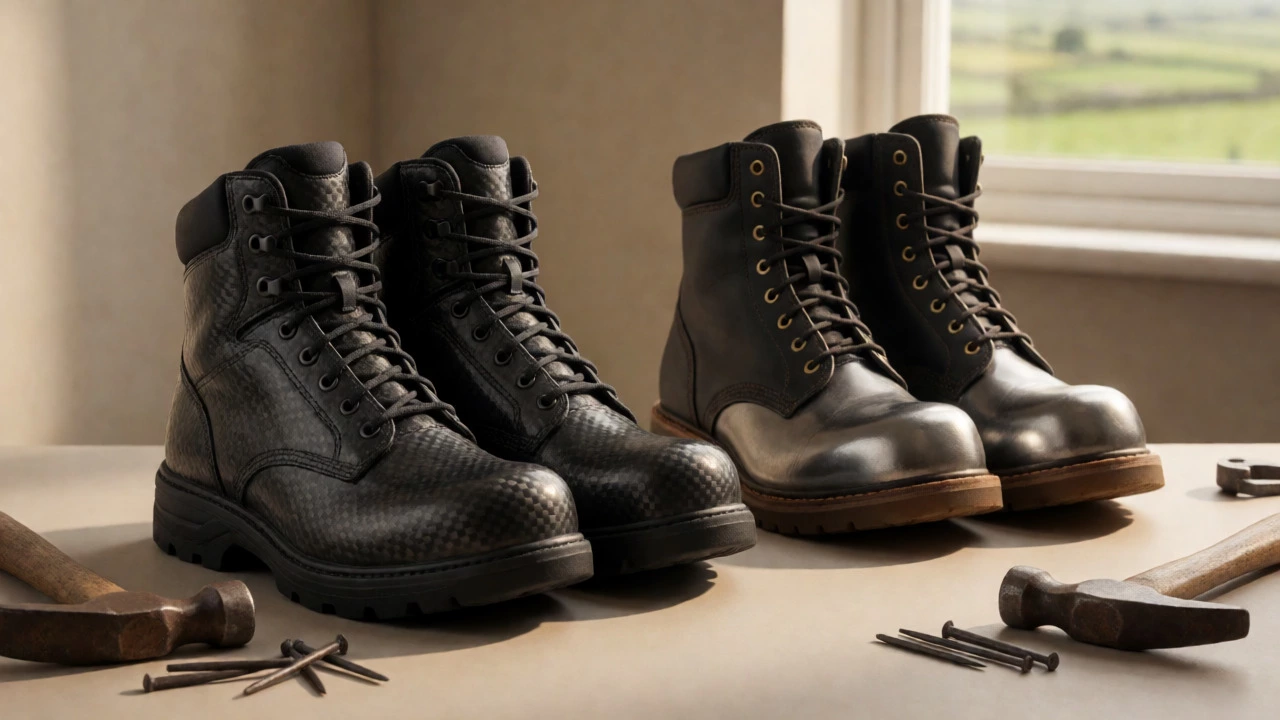
This is the biggest debate among Irish tradespeople. Traditionally, steel toe caps were the standard. They are strong, durable, and relatively cheap. However, they have drawbacks. Steel conducts temperature. In a freezing warehouse in Shannon, your toes will feel the chill. Worse, if you work near sensitive electronics or security checkpoints, steel can trigger alarms.
Enter composite toes. Made from materials like carbon fiber, fiberglass, or plastic, these caps are lighter and non-metallic. They don’t rust, they don’t conduct electricity, and they keep your feet warmer in winter. While historically more expensive, the price gap has narrowed significantly. Brands available in Ireland now offer composite options at competitive prices.
Is composite safer? Under the EN ISO 20345 standard, both must withstand the same 200-joule impact. So, strictly speaking, protection is equal. The choice comes down to comfort and environment. If you’re working in an airport hangar or a food plant, composite is often mandatory due to metal detection protocols. If you’re on a rough construction site, steel remains a robust, cost-effective choice.
Comfort Isn’t Optional: Ergonomics for Long Shifts
You can buy the toughest boot in Cork, but if it hurts your feet after two hours, you won’t wear it properly. And an improperly worn boot is a dangerous boot. Irish employers are increasingly aware that foot health impacts productivity. Back pain, knee issues, and plantar fasciitis often start with poor footwear.
Look for features that support long-term wear. Memory foam insoles provide cushioning, while arch support prevents collapse during long walks. Breathability is crucial too. Wearing thick leather boots in a humid Irish summer without ventilation leads to sweaty feet and blisters. Modern safety shoes use mesh panels and moisture-wicking linings to combat this.
Also, consider the break-in period. Unlike regular sneakers, safety boots have stiff components. Don’t buy a pair the day before a big project. Wear them around the house for a few evenings. Some Irish specialists recommend using a boot stretcher or specific conditioners for leather uppers to speed up the process. Your future self will thank you when you’re halfway through a shift in Sligo.
Legal Obligations: Who Pays for the Boots?
Under Irish law, specifically the Safety, Health and Welfare at Work Act 2005, the employer is responsible for providing Personal Protective Equipment (PPE) free of charge. This includes safety footwear if the risk assessment identifies a hazard to the feet.
This means if your boss asks you to pay for your own boots, they might be cutting corners. There are exceptions, though. If you choose a premium brand outside the company’s standard specification, you might cover the extra cost. Or, if you work freelance and bring your own kit, you bear the cost. But generally, for employees, the provision of compliant safety shoes is a legal duty, not a perk.
Keep receipts and maintenance records. If a boot fails-say, the sole separates and causes a fall-you need proof that you were wearing appropriate, maintained gear. Regular inspection is part of the routine. Check for cracks in the toe cap, worn treads, or delaminating soles. Replace them immediately if damaged. In Ireland, the HSA conducts inspections, and non-compliance can lead to fines or shutdowns.
Caring for Your Safety Gear
Safety boots are an investment. To make them last, treat them well. After a muddy day in the countryside, let them air dry naturally. Never put them next to a direct heat source like a radiator, as this dries out the leather and causes cracking. Use a quality leather conditioner every few weeks to maintain water resistance.
Rotate your pairs if possible. Wearing the same boots every day doesn’t give the moisture time to evaporate fully, leading to bacterial growth and odor. Having a second pair allows each to rest for 24 hours. Also, replace the insoles regularly. Most safety shoes come with removable insoles; swapping them out every few months restores cushioning and hygiene.
Do I legally need OSHA shoes in Ireland?
No, you don't need "OSHA" shoes specifically, as OSHA is a US regulation. In Ireland, you need safety footwear that complies with European standards, primarily EN ISO 20345. However, many boots sold as "OSHA compliant" also meet EU standards, so they are acceptable if they carry the correct CE marking and EN certification.
Can my employer force me to buy my own safety boots?
Generally, no. Under Irish health and safety laws, employers must provide necessary PPE, including safety boots, at no cost to the employee. Exceptions may apply if you choose a more expensive model than the standard provided, or if you are a contractor who supplies their own equipment.
What is the difference between S1 and S3 safety boots?
S1 boots offer basic protection with anti-static and energy-absorbing heels, suitable for dry indoor work. S3 boots add water resistance, anti-puncture midsoles, and cleated outsoles, making them ideal for outdoor construction and harsh environments where nails and wet conditions are present.
Are composite toes safer than steel toes?
Both provide the same level of impact protection under EN ISO 20345 standards (200 joules). Composite toes are lighter, non-conductive, and better for temperature regulation, while steel toes are often cheaper and very durable. The choice depends on your specific work environment rather than safety performance.
How often should I replace my safety boots?
There is no fixed timeline, but you should inspect them regularly. Replace them when the tread is worn smooth, the upper is cracked, the toe cap is deformed, or the sole separates. For heavy users, this might be every 6-12 months; for lighter use, it could last longer.